Project Narrative
This project was co-financed by the Australian Government and the World Bank. It was designed to extend the learning experiences of LAMP I to other provinces and municipalities throughout the Philippines with the view of supporting the Government of the Philippines (GoP’s) long-term Land Administration and Management (LAM) program goal of reducing poverty and enhancing economic growth by improving the security of land tenure in urban and rural areas in the Philippines. The development objectives of the technical assistance included:
(a) Supporting the process of institutional reform initiated under LAMP I through policy and legislative development and providing support for advocacy and consensus building
(b) Making preparations for the establishment of the Land Administration Authority (LAA) and progressive roll out of tenure security
(c) Making preparations for the establishment of the National Appraisal Authority (NAA) in parallel with the piloting and development of land valuation and taxation activities
(d) Developing a complete and functional land administration environment, operating through the One Stop Shop (OSS) in the first instance (and thereafter though units of the LAA and the NAA) in selected provinces and municipalities which linked with broader local government unit capacity building for good governance
(e) Developing a linkages program with GOP, civil society and donor agencies to facilitate post-titling social and economic development activities targeted at poverty reduction and economic development
(f) Supporting capacity building and developing core competencies in public and private sector institutions involved in the design, implementation and management of the above activities through a comprehensive program of human resources management and development assistance, involving both formal education and on-the-job training.
Key services provided
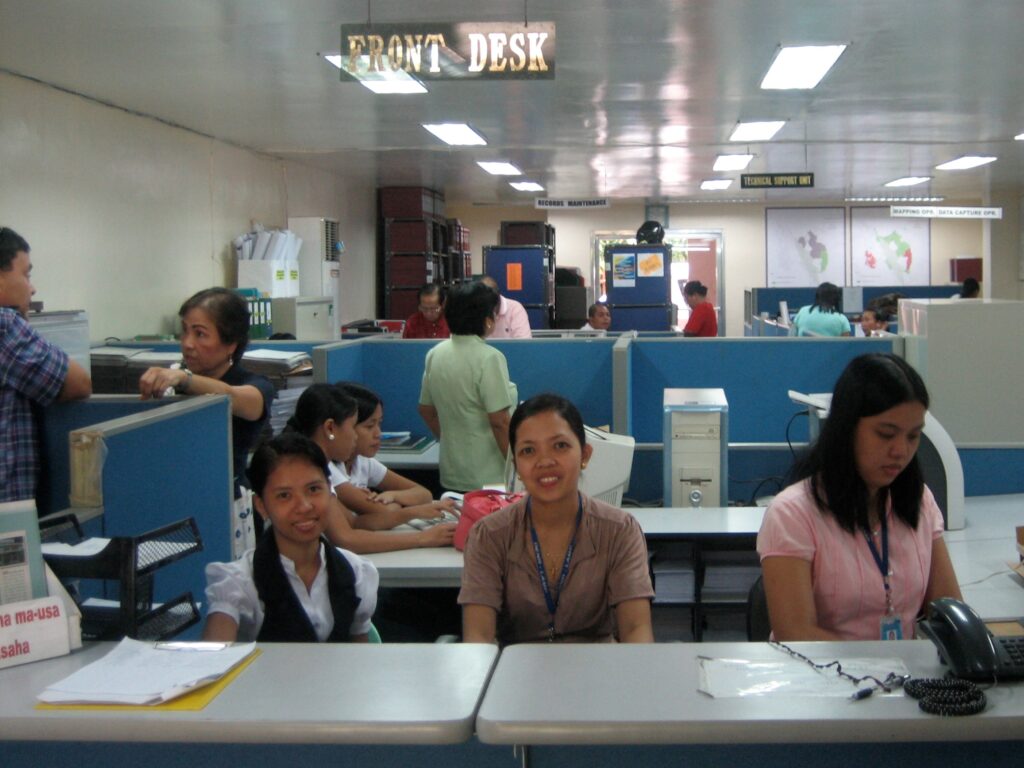
Institutional Reform/Service Delivery Systems: LEI has assisted the GoP to create a One-Stop-Shop (OSS) that brings under one roof all agencies involved in the issuance of title and subsequent land transactions, integrating LAM agencies and contributing to better service delivery. We designed, developed and implemented a computerised land records and transaction processing system to enable the OSS’s to provide integrated land services using data base, GIS and spatial processing. The OSS in Leyte now allows people to get true copies of certificates of titles in just three hours (previously it took 2 weeks). There is a customer desk that handles requests, lessening the burden and cost to customers in making transactions at various agencies in different locations. The increasing transactions since 2002 (under LAMP1 when OSS Leyte was established) up to 2007, translated to better revenues by 281% and 308% for Registry of Deeds (RoD) and Community Environment and Natural Resources Office (CENRO), respectively.
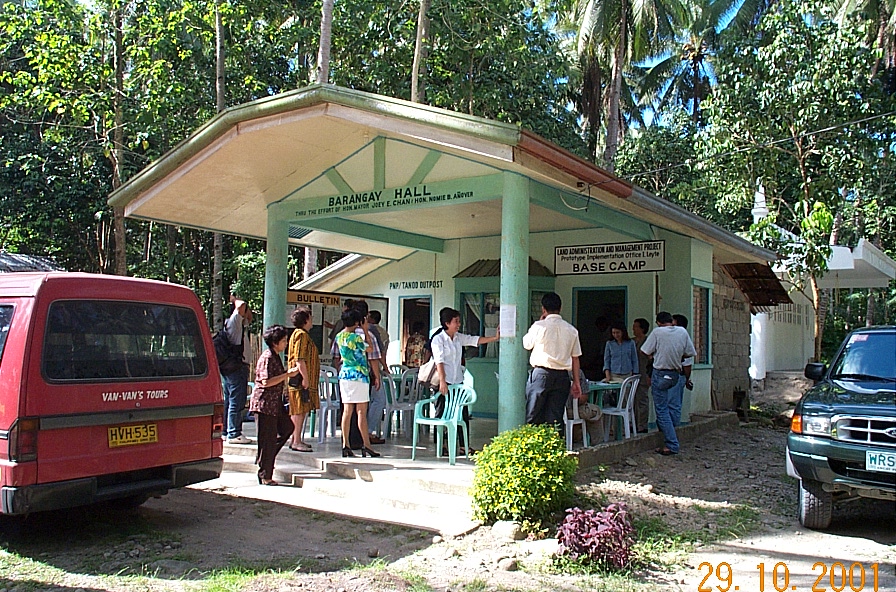
Improved systems and procedures: LEI has produced standardized procedures of simplified survey and mapping and accelerated land titling for the Department of Environment and Natural Resources (DENR). This resulted in the production of credible surveys, prevention of fake title,s and opportunities for people to get their land titles at a lesser cost and waiting time than the previous process. After 2.5 years, about 10,700 titles were distributed to beneficiaries including those who had waited for more than 10 years in the old system.
Land Policy Reform: Through the project advocacy strategy, more stakeholders (local government units, basic sectors, real estate companies, professions and financial community) understand the urgency to pass 4 reform bills (Land Administration Reform Act, Free Patent Amendment, Real Estate Services Bill and Valuation Reform Act) drafted under the project. These groups are driving and demanding government to do the reform, with some of them lobbying for the passage of the Bills.
Adoption of Valuation reforms: New property valuation methods were developed and staff trained to produce real market values as a basis for taxation by local government units. LEI designed and developed a system for retaining and distributing land sales and property data from a web enabled system which is used in-house to link the local offices to regional and central office. In the past, the same rate of tax was imposed on properties regardless of its market value, giving rise to inequitable tax collection. The cities of Iloilo and Naga held public hearings to present the schedule of market values (SMVs), and a unified basis of national and local taxation for land has officially been adopted by the Bureau of Internal Revenue.
Education and Capacity Building: The project has trained 500 staff in cadastral surveying, land adjudication, and land related services. LEI has built the capacity of (i) DENR staff in Leyte to train adjudication teams in the rollout of titling to other sites through use of competency-based training materials and (ii) the Bureau of Local Government Finance (BLGF) in training on valuation. The project is also assisting the University of Philippines and Leyte State University, through linkages with international universities, to establish courses in Geodetic Engineering and Valuation.
International Recognition of Innovation and Best Practice: The FAO’s Land Tenure Service Chief, Dr. Paul Munro-Faure, nominated LAMP to the Special Unit for South-South Cooperation of the United Nations Development Program (UNDP) at the 2011 Global South-South Development Expo as an example of a successful solution to support rural and agricultural development. The Chief of FAO’s Integrated Food Security Support Service, Abdul Kobakiwal, commented that
“The experience of the Philippines offers a comprehensive solution to improving land tenure regulation and land rights, which could inspire other developing countries.”
As project manager, LEI are providing effective management to deliver the outcomes required by the GOP and the funding agencies of AusAID and the World Bank. LEI is managing the technical assistance input, liaising with the government and donors, and ensuring the quality control measures of the project are met. LEI is managing an US$11 million trust fund designed to deliver flexible technical assistance and training to LAMP II, and support to provinces and municipalities in initiating land administration reforms through an Innovation Support Fund.