
Her Land: Landmark Publication Launched at the UNCCD COP16

Land Equity International was invited to contribute to the publication and interviewed Dr. Sochanny Hak (Dr Channy) and Dr Hue Le in an article titled ‘Giving voice to smallholder women farmers in the Mekong Region’ (pp 50-53). This article discusses the Mekong Region Land Governance (MRLG) project which over the past decade has had a […]
International Land Measurement Standards published
LEI is pleased to see the First Edition of the International Land Measurement Standard published – find it here [https://ilmsc.org/the-standard/].
Nov11 SDG Land Indicator
In the November 2015 the Global Donor Platform for Rural Development – Working Group on Land, issued the following policy brief in support of the Land Indicators that have been included in the Sustainable Development Goals (SDGs) which replace the Millennium Development Goals (MDGs). There are an important set of indicators that we all need to strive towards meeting in our commitments, actions and collaborative efforts.
CoFLAS presented at the 2014 Inaugural Conference on Land Policy in Africa
Following its validation at an Expert Group Meeting in Bangkok in October, the Global Land Tool Network Costing and Financing of Land Administration Services (CoFLAS) Tool for Developing Countries was presented at the 2014 Inaugural Conference on Land Policy in Africa (CLPA).
Urban Development Strategies to Combat Poverty in Asia
More than 1.5 billion people live in Asian cities and by 2030 at current urban growth rates, an additional 1.2 billion people will be living in cities in the region. The region is facing growing problems of access to safe drinking water, rapid population growth, reduced access to land for growing food, and climate change related problems of natural disasters and rising sea levels.
LGAF: The Land Governance Wrap Up
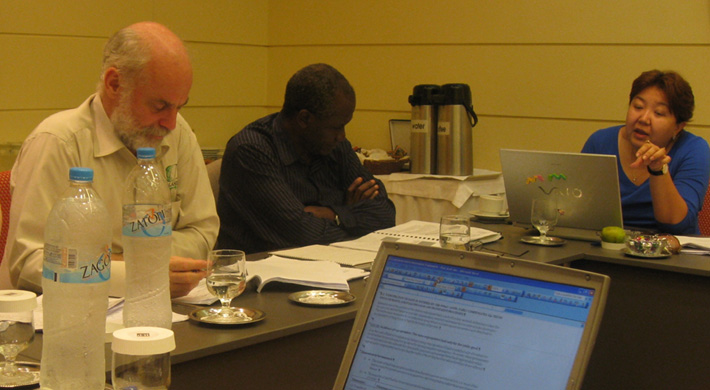
After an extended process of conceptualising, developing, and pilot testing, the Land Governance Assessment Framework (LGAF) in collaboration with the World Bank, is now being rolled out in Benin, Rwanda and Mozambique. A final Economic Sector Work report on LGAF will also be published in the near future by the World Bank.
Governance In Land Administration
The Governance in Land Administration Project is in full swing. After an initial presentation of the fundamental concept during the World Bank Land Thematic Group Mini-Retreat, Tony spent a very busy week meeting with Bank staff discussing their ideas and experiences on land administration projects. Not being a typical LEI project, these face to face encounters provided a crucial stage in developing an understanding of the project needs and significantly expanding our coverage of land administration issues in a global context.
