This article is based on an interview with Hongthong Sirivath, Land and Livelihood Program Coordinator at Village Focus International in Lao PDR, who attended the ceremony in Khok Savang in May. Hongthong and Village Focus International were actively involved with the Mekong Region Land Governance (MRLG) Project in the Lao PDR national Customary Tenure Alliance and the work outlined below on land rights in forest communities.
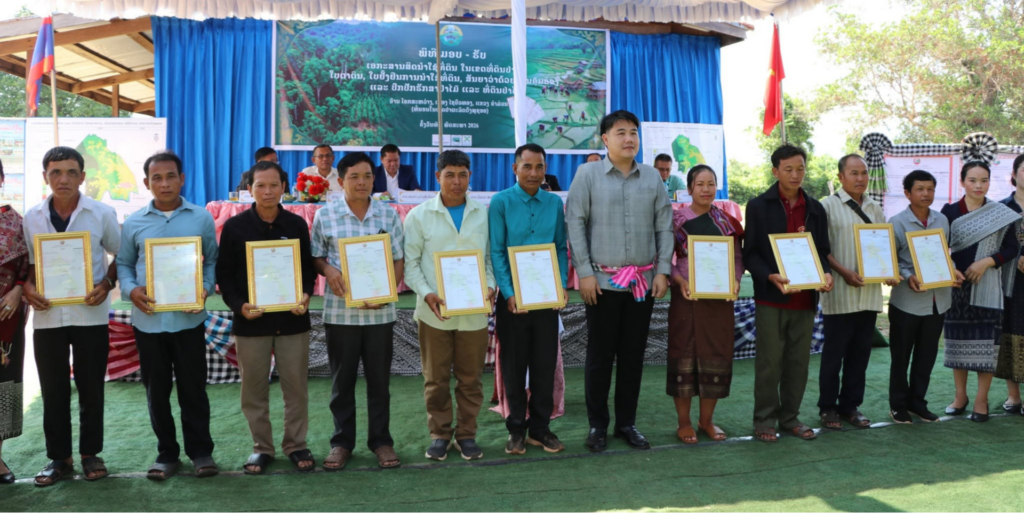
In May of this year, families in Khok Savang village, Khammouane province, gathered to receive something they’d been waiting years for: formal documents recognising their rights to the land they live and farm on. The ceremony covered 205 land parcels in and around the Dongphusoy Production Forest Area. These plots will fall under either land titles, land use certificates, or Forest Land Protection and Management Contracts.
Mr. Saykham Phasitsaythideth (Head of the Provincial Organizing Committee), Mr. Virana Sonenasin (Director General of the Department of Agricultural Land Management), and Dr. Sinnasone Sengchanthavong (Xaybouathong District Governor) jointly chaired the event.
How insecure tenure impacts communities
Behind the paperwork is a much longer story. For years, communities living within Lao PDR’s designated forest land existed outside the formal land administration system. They had homes and livelihoods there, but no recognised tenure – which meant their land could be reassigned to other uses, including agriculture, mining, or infrastructure concessions, and disputes were common. Without secure rights, families also had little room or incentive to invest in their land long-term. Land couldn’t be easily sold, transferred, or used as collateral for loans, which closed off economic opportunities that many would otherwise be able to take advantage of.
“People were really glad because they have been waiting for this for a long time. Land contestation happened quite often and people were scared to lose their land.”
Hongthong Sirivath, Village Focus International.
The MRLG Project worked on this problem with the national Customary Tenure Alliance (a coalition of government agencies and civil society groups facilitated by MRLG) for more than a decade. The project focused on increasing capacity and political will, collaborating with Alliance members and co-designing solutions alongside Indigenous Peoples and Local Communities. While the situation facing forest communities was well known, it took some time for it to receive policy attention. What changed things was evidence: sustained advocacy paired with data from the field that made the scale of the problem and the case for fixing it hard to ignore.
A legal opening: National Assembly Resolution 57
The ceremony was the latest step in a process that began well before 2026. After years of consultation and evidence-building, in September 2024 Lao PDR’s National Assembly issued Resolution 57, amending the Land Law’s provisions on forest land use and customary use rights. For the first time, communities living inside forest areas became eligible to receive land titles for permanent agricultural, residential and construction land – something that had not been possible before. The resolution was expected to affect more than 3,000 villages across the country.
Piloting forest land rights recognition in Khok Savang
Turning that legal opening into practice fell to the Customary Tenure Alliance, working with support from Prime Minister’s Order 20, which further strengthened the legal basis for recognising land rights in state forest areas. The alliance piloted a set of practical instruments (Village Land Use Planning, Village Forest Management Planning, and land surveys) across seven villages, including Khok Savang.
The pilot programme showed that forest management priorities and the realities of communities already farming that land weren’t as incompatible as assumed. The programme fed into a national procedural guideline, which went through further testing and revision before the Ministry of Agriculture and Environment approved it for use across the country.
“This is a great achievement,” Hongthong says of the guideline’s approval.
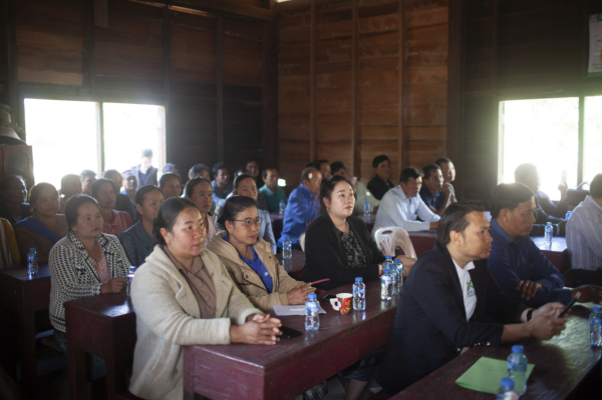
The MRLG team met with villagers from Khok Savang village (Xaybuathong District, Khammouane Province) on a site visit in 2025 (Source: MRLG project).
Community participation and gender equality
The community was involved throughout, starting with Free, Prior and Informed Consent processes and continuing through mapping, verification and final decisions. The team built measures to ensure proper gender inclusion into the process – women took an active role throughout, and land rights were recognised jointly for husbands and wives wherever applicable.
A national commitment
Fortunately, Khok Savang isn’t a one-off. The Lao government has committed to rolling out the same tenure recognition process across all 3,267 villages located in or near forest areas over the next five years.
For the families who walked away with land documents, the change is immediate – more security, stronger protection, and a real basis to invest in their land or use it as collateral. For Lao PDR, it’s the start of applying this approach at the national scale. And for those who worked on or with the MRLG project, it’s confirmation that the model they spent years building with stakeholders actually works: patient, collaborative policy work, done with governments and communities rather than around them, pays off.
The work is far from done, but for now we can celebrate this milestone and look forward to further progress in Lao PDR, securing the rights of communities in forest areas.
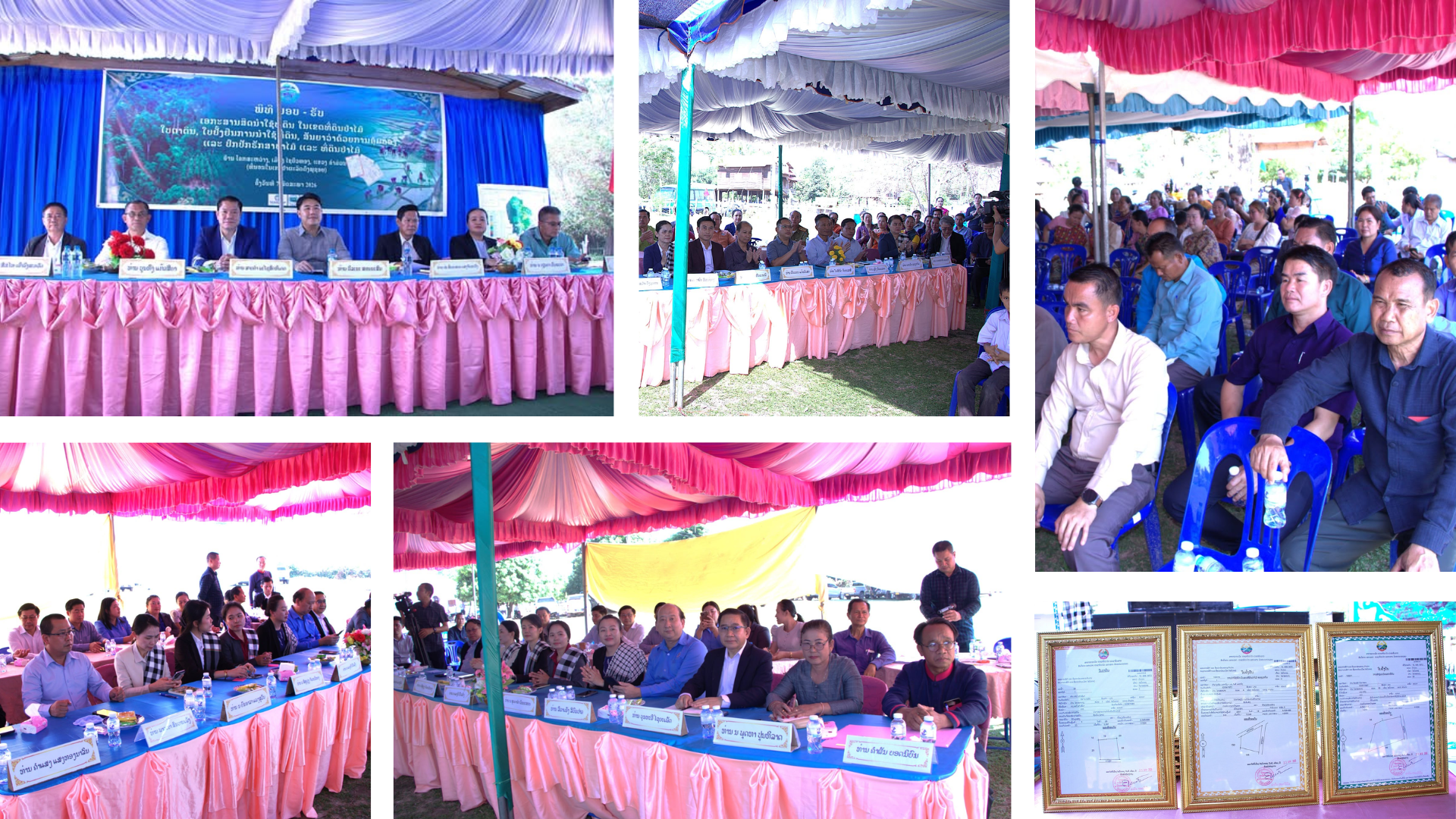
Below are some images from the ceremony, courtesy of the Agriculture and Environment New Page.
The Mekong Region Land Governance project spanned Cambodia, Lao PDR, Myanmar and Vietnam, from 2014 to 2025. Primarily funded by the Swiss Agency for Development and Cooperation (SDC) and implemented by Land Equity International and Gret, the project improved land access and tenure security for 38.5 smallholder farmers through legal and policy reforms.