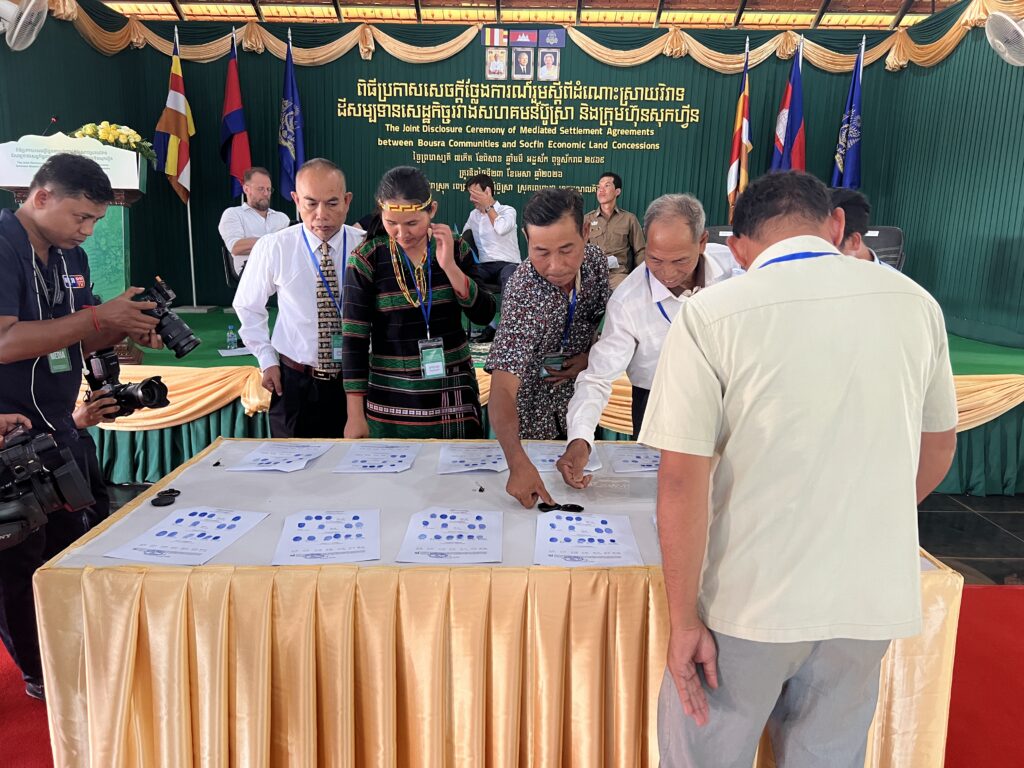
In a landmark step towards transparency and mediated conflict resolution in Cambodia’s long-running land disputes, 26 mediation agreements concerning four separate land disputes involving Socfin-KCD and Coviphama, and representatives of five Bunong communities (Pu Tert, Pu Raing, Pu Char, Busra and Pu Lu) have been made publicly accessible.
The public disclosure ceremony was held in Pech Chreada district hall in Cambodia’s Mondulkiri Province on 23 April 2026. There, speakers announced agreement among parties to lift confidentiality provisions, promote transparency and showcase the shared understanding of the mediation process outcomes. The ceremony highlights the successes of mediation and promotes its use in resolving land disputes in Cambodia.
For communities, mediators and partners who have worked on the process for nearly a decade, the event represented something rare in land governance work: a hard-won outcome built through years of dialogue, negotiation and continued commitment from all parties.
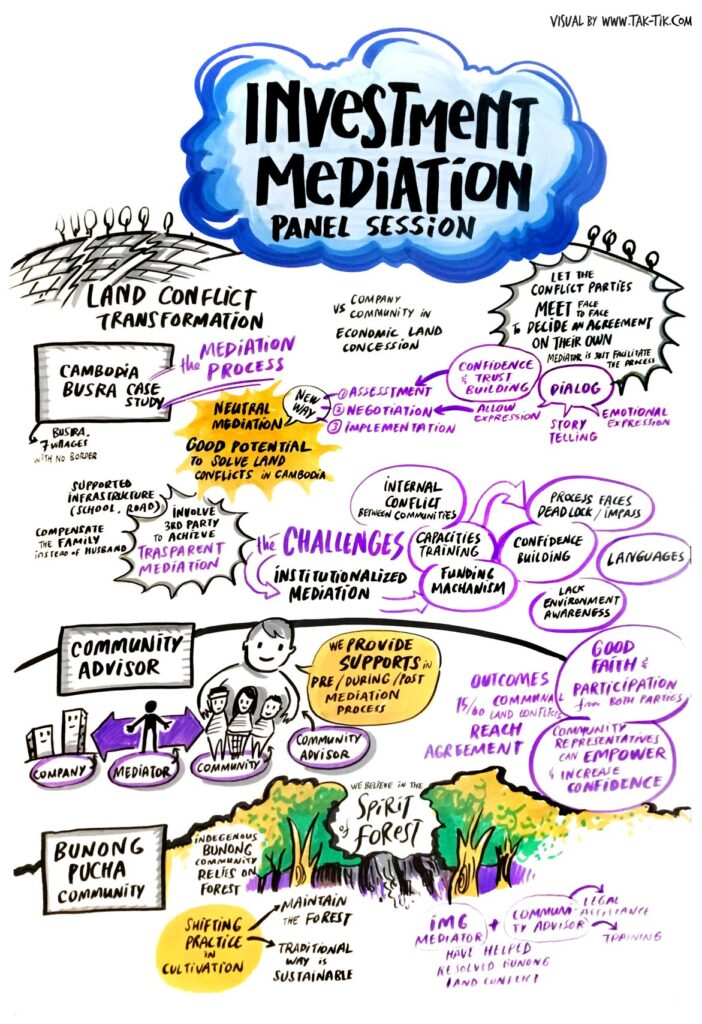
The agreements stem from the Cambodian Land Dispute Independent Mediation (CLAIM) process, supported by the Mekong Region Land Governance (MRLG) program and facilitated by the Independent Mediation Group (IMG). CLAIM brought together Bunong Indigenous communities, company representatives, local authorities, civil society organisations and observers from the United Nations.
Independent evaluators described CLAIM (2017-2021) as “one of the most advanced examples of land mediation involving indigenous communities and a private company in Southeast Asia.”
More than a land dispute
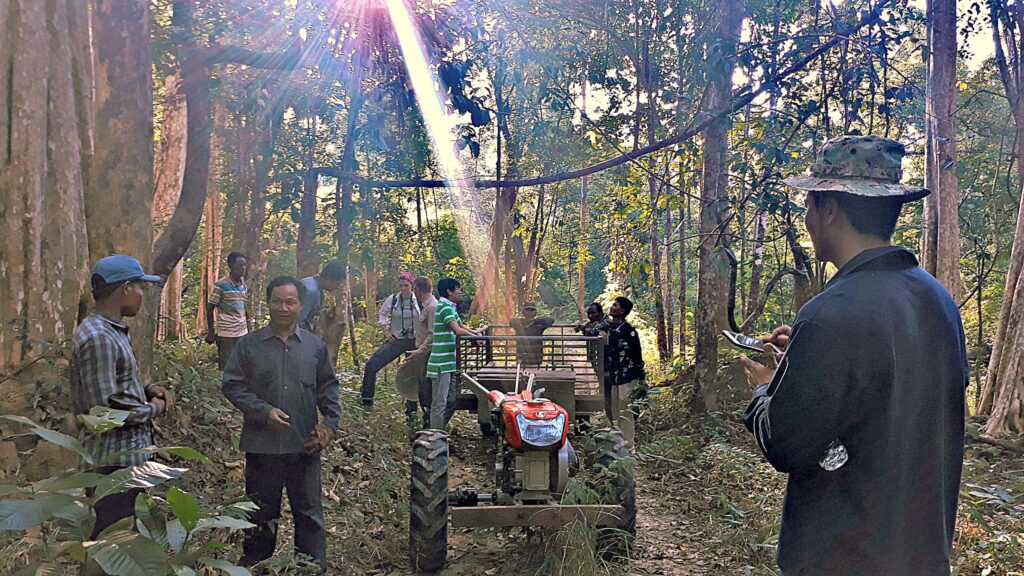
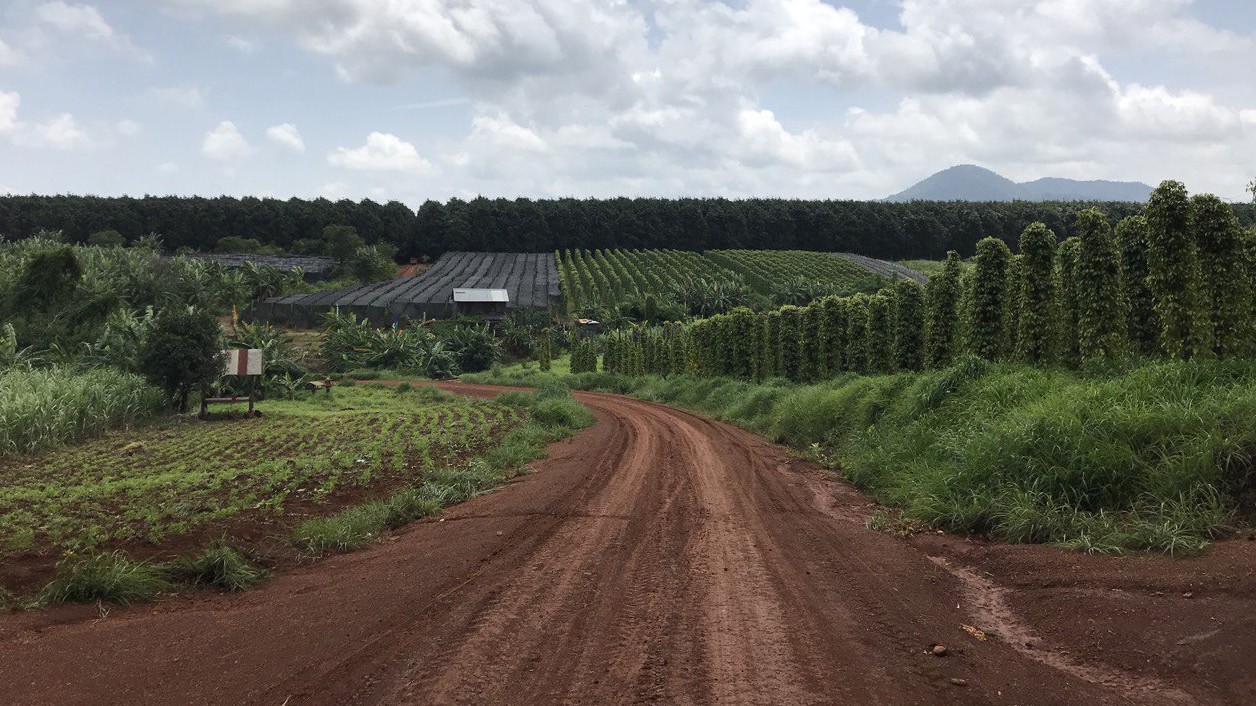
The dispute traces back to economic land concessions granted between 2008 and 2010. This land overlapped with areas traditionally used by Bunong communities for farming, cultural practices and spiritual sites.
For many Bunong families, the impacts of the concession were devastating.
Community members described losing farmland, forest access, wildlife, traditional medicines and sacred spaces following the expansion of industrial agriculture into the area.
Tensions surrounding the land disputes escalated over many years, with protests, road blockades and legal action all taking place before mediation was introduced as an alternative way forward.
MRLG’s role in building the process
The mediation initiative was first brought to MRLG’s Innovation Fund in 2016 by H.E. Poch Sophorn, founder of IMG and MRLG alum, who proposed mediation as an alternative way to address the long-running conflict. MRLG agreed to support the initiative, recognising mediation as an innovative approach to resolving complex land disputes involving Indigenous communities and large-scale agricultural investment.
Importantly, MRLG’s role went far beyond funding negotiation meetings.
The program supported years of preparatory work before formal mediation began. This included land mapping, conflict analysis, community consultation and training designed to help communities understand the mediation process and participate confidently in negotiations. Community members later reflected that the training helped them understand both their land rights and how to engage in negotiations effectively.
Independent funding was crucial in ensuring accessibility for communities that would otherwise have been unable to participate in such a lengthy process. As one district authority representative noted during the independent evaluation: “Not needing to pay for the mediation and legal support made the solution accessible for the Community.”
Sophea Pheap, MRLG representative and attendee at the ceremony, recalled one speaker saying the process “could not happen” without the support provided by organisations involved in the mediation effort, empowering communities to have an informed seat at the mediation table.
The evaluation also found that MRLG’s long-term commitment to the process was one of the key factors that differentiated CLAIM from earlier failed attempts to resolve the conflict. These reflections underscore a key lesson from the CLAIM process: effective mediation takes time.
From tension to collaboration
The most striking theme at the ceremony was the dramatic improvement in relationships between communities and the company over time.
“There was lots of tension at first,” explained Sophea after the event. “But the community and the company worked hard to try and understand each other.”
One story shared during the ceremony captured this transformation clearly. During the mediation process, community representatives and company staff often travelled long distances together to attend negotiations. Despite difficult and sometimes highly emotional discussions taking place in the meetings, participants gradually built personal relationships along the way.
Community representatives shared their experience, reflecting emotionally on the significance of finally seeing the agreements released publicly. Mr. Brong Teuch, an elder from Bour Sra Village, stated:
The ceremony was a day of great happiness, as we jointly announced the 26 agreements. Before the mediation, there was significant tension. Thanks to the settlement agreement, we have achieved positive outcomes, with the company supporting community development.
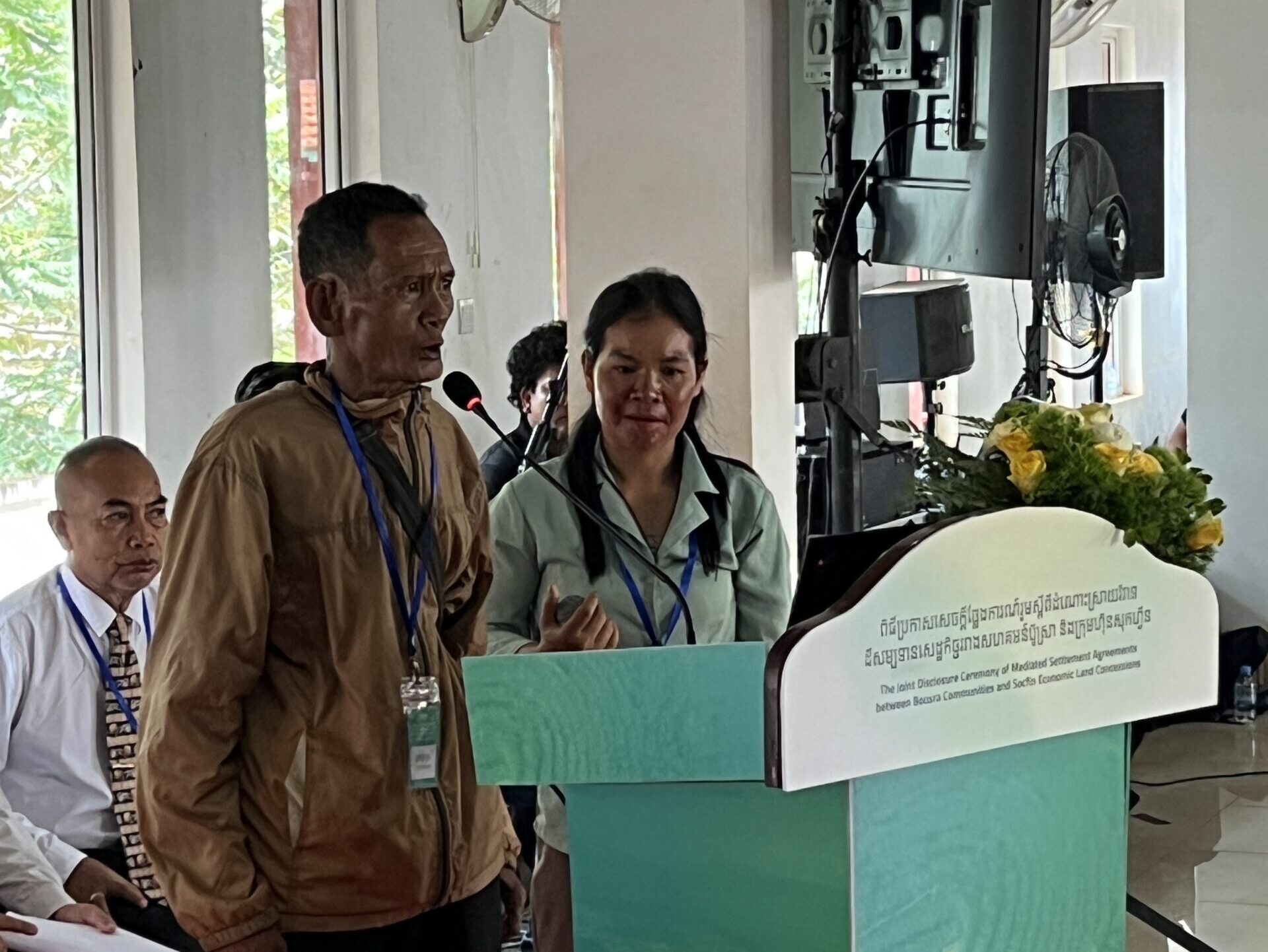
One community representative described the event as a “really, really great day”. Now, communities can openly share the agreements and the progress made since the mediation concluded.
The disclosure follows a joint decision by the parties to lift confidentiality provisions that had applied during the mediation process. For many involved, this step is important for transparency and also for remedying any misunderstandings around the mediation process.
Practical outcomes are already underway
The agreements are already producing tangible outcomes on the ground.
According to Socfin, 511 hectares of communal land within concession areas have been jointly identified and mapped with participating villages as part of ongoing land clarification processes. Community development funds and local infrastructure initiatives have also been established.
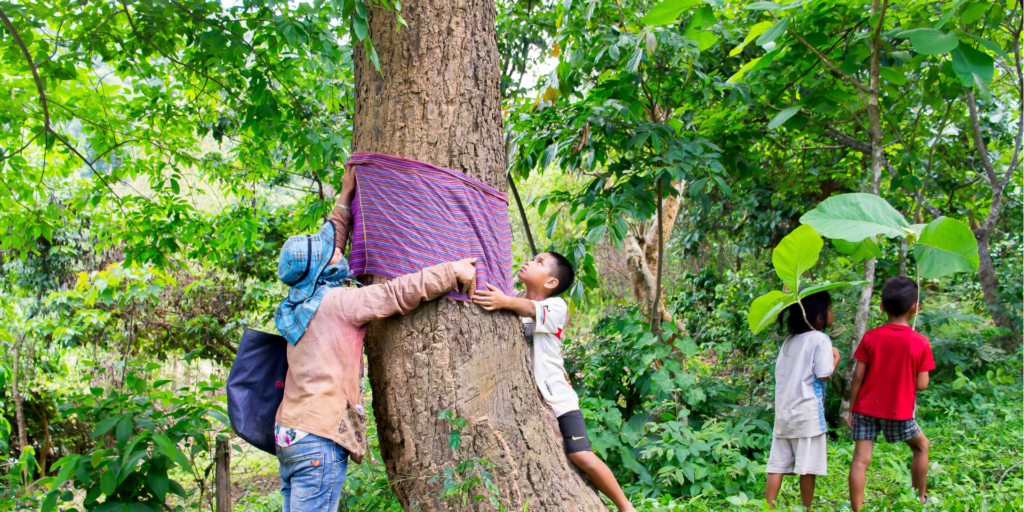
Community representatives described how land mapping undertaken during the mediation process is now helping support future land title registration efforts. Other agreements relate to the protection of sacred forests and culturally significant sites, land access, agricultural livelihoods and ongoing dialogue between communities and the company.
In one significant gesture announced during the ceremony, community representatives said the company had also agreed to forgive debts linked to family rubber plantation arrangements – a step speakers described as going beyond the original agreements.
A model for land dispute resolution beyond Bousra
Participants throughout the ceremony repeatedly described the mediation as a potential model for resolving complex land disputes elsewhere in Cambodia and across the region.
Sophorn now serves as Under Secretary of State at Cambodia’s Ministry of Justice and drives the country’s growing Alternative Dispute Resolution (ADR) efforts. Presiding over the event, he reflected on how the mediation helped build mutual understanding and trust between communities and the company.
The independent evaluation similarly concluded that the process provides “a valuable template for other complex, multi-party land claim disputes” and could serve as a replicable model for resolving future land conflicts in Cambodia and across Southeast Asia.
Participants and evaluators alike found that the process achieved more than signed agreements. It also strengthened community cohesion, improved communication between communities and Socfin, and increased confidence among community members in their ability to negotiate and resolve disputes peacefully.
As communities, company representatives, and others who had become invested in the mediation process over the years gathered in Bousra to celebrate the release of the agreements, the atmosphere was not about victory for one side over another.
Instead, after years of hard work, the day reflected something much more difficult to achieve: a shared commitment to moving forward together.