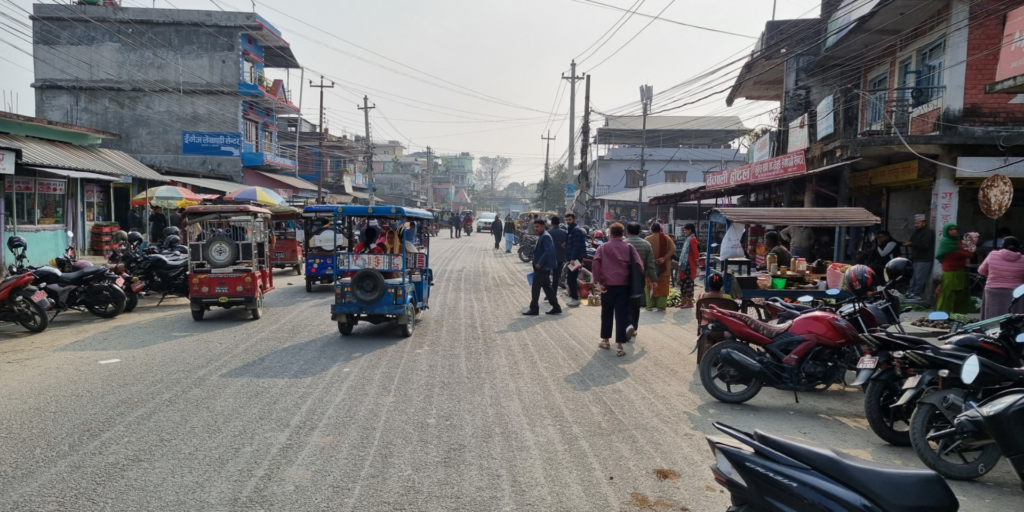
LEI provided technical assistance for the World Bank and Government of Nepal to support the digitalisation and decentralisation of Nepal’s land administration system, as well as the establishment of an integrated land and property valuation system.
Nepal’s cadastral and land registry records are relatively comprehensive and widely available in digital format, providing a sound base for modernization. What is lacking, however, is harmonization to achieve efficiency and accessibility goals, benefiting all. Currently, separate systems and agencies manage survey and land registration data – a burden, given that almost all land administration services require data from both systems. Whilst the 2015 Constitution established a federal system, municipalities remain disconnected from cadastral data and lack the capacity to provide effective service delivery and perform the functions allocated to them in the 2015 Constitution.
Nepal’s land and property valuation and taxation system would also benefit from greater coherence and integration. Improved transparency, consistency and enforcement could all contribute to improved trust in the real estate market, improved services and sustainable revenue generation.
In response to these challenges, the Ministry of Land Management, Cooperatives, and Poverty Alleviation (MLMCPA) requested support from the World Bank to support the digitalization and decentralisation of Nepal’s land administration system, as well as the establishment of an integrated land and property valuation system. Formally launched during the FIG Regional Conference in Nepal in November 2024, a grant from the Korea-World Bank Partnership Facility (KWPF) provided the project with funding. The project, following a no-cost extension, was officially concluded at the end of October 2025.
Key Project Services
The primary goal of this consulting assignment was to provide strategic recommendations on several critical aspects of Nepal’s land administration services by carrying out in-depth assessments, consulting widely, and utilizing the assessment results and international innovations to provide prioritized and time-based recommendations for the World Bank and Government of Nepal.
As the lead partner, LEI worked with a team of Nepali and international experts to produce the following reports. These were developed following extensive in-country interviews and research visits to federal, district and local government offices:
- The digitalization of the land administration system – this report focused on the transition into a unified digital land system that was fit for the Nepali context.
- The decentralization of land administration services – this report analysed how the system could move from a centralized system (with decentralized federal offices) to a system that aligns with the 2015 Constitution – namely where land functions are meant to mostly be performed at the local government and district level.
- The establishment of a digital land and property valuation and taxation system – this report provided recommendations to ensure efficient, compulsory and fair tax collection based on accurate housing and property values.
- The legal and regulatory gaps and changes to facilitate and enable digitalization and decentralization – this report identified a series of priority legal and regulatory reforms.
- A deeper assessment of the existing taxation and valuation system in seven local governments Nepal, including costs of land administration functions, human and financial capacity assessments and an assessment of existing revenue from land taxation. The report included a list of reform recommendations.
- The Land Administration Consolidated Roadmap – this final report presented a consolidated land administration roadmap moving forward, summarizing the main activities over a 10-year period, based on the previous five reports, the projected costs of such a reform program, the elements of such a program as well as the expected financial and social benefits of adopting the reforms.
In addition to the above, LEI organized a study and learning exchange to Indonesia for representatives of the MLMCPA, to understand the Indonesian experience with land administration reforms.
To conclude the consultancy, the team prepared a final workshop to present and validate the recommendations proposed in the reports referenced above. This workshop was attended by more than 80 representatives from the government (national, provincial and local), private sector, civil society and academia. Overall, the technical assistance provided over the 10 months was credited by the Government of Nepal in offering a viable and pragmatic path forward for Nepal’s much-needed land administration reforms.
