The challenge
Vanuatu Affordable and Resilient Settlements (VARS) is a US$25 million World Bank-financed programme pursuing two objectives: improving access to resilient infrastructure and services in new and existing settlements, and strengthening land planning and management for Greater Port Vila as a whole. To get there, the government is pairing a ten-year Land Development and Investment Strategy with a five-year plan to upgrade 23 existing informal settlements, backed by a set of pilots and institutional reforms to prove the model works. LEI’s assignment sat within this wider effort. We focused specifically on the greenfield subdivision pilot – one piece of a programme that also includes upgrading four informal settlements and rehabilitating flood-management infrastructure.
Greater Port Vila is growing fast, and its land market is struggling to keep up. By 2030, an estimated 1,170 hectares of new serviced land will be needed to meet housing demand, two-thirds of it for low- and middle-income households – yet inconsistent subdivision regulations, unclear infrastructure cost-sharing and slow development approvals mean new land development is almost entirely private-sector led and skewed towards higher-income buyers. Between 1996 and 2020, only an average of 170 new residential lots were approved in Greater Port Vila each year, pushing many households into informal settlements on high-hazard land, often without reliable water or power.
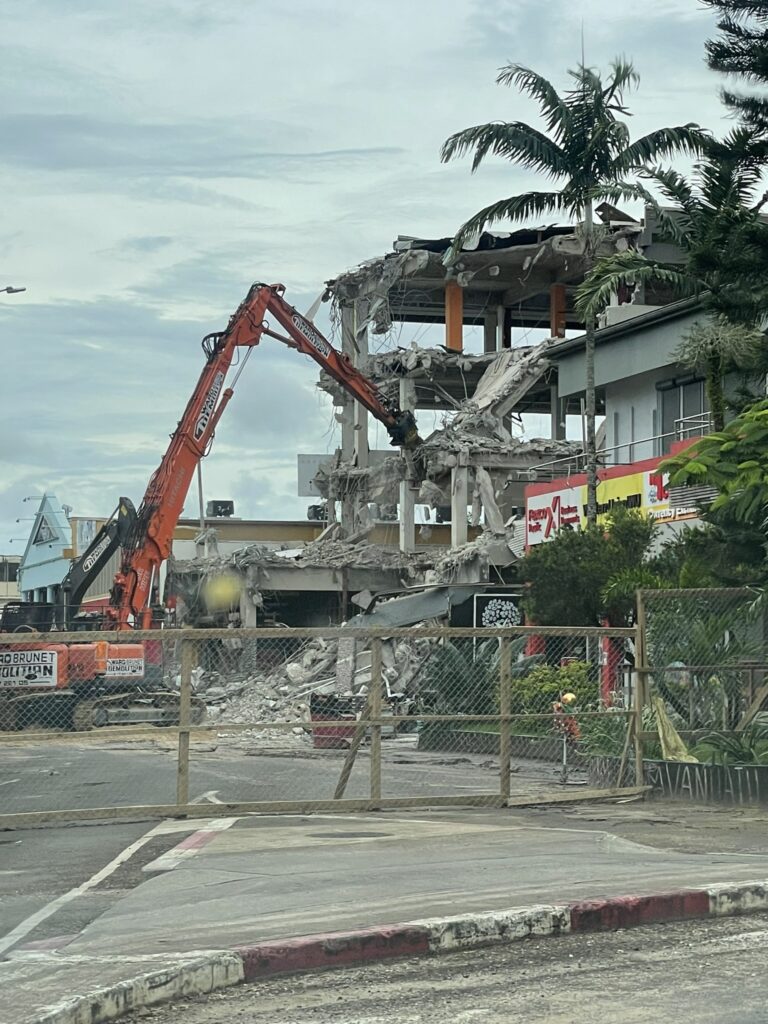
Vanuatu’s exposure to disaster compounds the problem. The country weathered three major cyclones in 2023 alone. On 17 December 2024 a 7.3-magnitude earthquake struck just 30 km from Port Vila, killing 14 people and affecting an estimated 80,000 more. Six months on, parts of the CBD remain closed, and some businesses are relocating to the suburbs for good. It raises an uncomfortable question: how can people on low incomes be expected to save enough to buy land when disaster keeps striking?
Unlocking a single affordable, serviced site is only a starting point. Lasting change depends on broader reform to how land is administered, financed and made available for housing across Vanuatu.
Our approach & role
Commissioned under the VARS project’s Component 1 (Affordable and Resilient New Settlement Development), LEI supported the Ministry of Land and Natural Resources to develop and test a new model for delivering affordable, serviced housing on government land – with lessons designed to apply well beyond the pilot site itself.
Recognising that success would depend as much on public trust and market readiness as on technical design, our work combined policy development with hands-on testing of demand among the lenders, developers, builders and service providers Vanuatu’s housing sector will need going forward.
Within this scope, our team’s contribution focused on:
- Policy and cost recovery: developed a Cost Recovery Policy for the Etas subdivision, designed to be specific enough to guide the pilot while serving as a model for how government sustainably funds infrastructure on future sites.
- Market and stakeholder engagement: tested appetite among lenders, developers, builders and service providers, and designed transparent, gender-responsive eligibility criteria, an applicant selection process, and a marketing and communications strategy to build public trust in both the site and future policy.
- Land tenure design:</strong> analysed the leasehold options available for the site – standard leases, sub-leases and strata/community title – weighing citizen familiarity, administrative burden and risk allocation under each.
- Planning and legislative support: worked with government to prepare a site-level Zoning and Development Control Plan, draft legislative amendments and restrictive agreements, building legislative and planning capacity within the Ministry along the way.
Results & impact
The Etas pilot showed that ni-Vanuatu citizens would accept smaller, more affordable plots – 400m² rather than the customary 1,200m² – in exchange for land that is serviced and in a low-hazard location. According to market testing, there was genuine but uneven appetite for the model:
- Lenders were willing to relax lending criteria but lacked the data to size borrower capacity;
- Developer interest was limited in a market still dominated by land-only subdivisions;
- No local builders could meet the upfront capital needed to develop the site; and
- Service providers were keen to locate there but would likely need government co-investment to do so.
Beyond the pilot, the assignment set out a menu of options for government to build on – a foundation for the next phase of Vanuatu’s land reform.
Testing a new development model
The Etas subdivision allocated close to 30% of its total area to green and non-residential space – valuable amenity where residential lots are small, but a function that is hard to sustain under customary leasehold without clear guidelines on who is responsible for its ongoing management. Resolving this is one of several unfinished pieces of the model that government will need to carry forward.
Building resilience after disaster
The December 2024 earthquake sharpened the case for this work rather than distracting from it. With parts of central Port Vila still closed six months on and businesses relocating away from the CBD, affordable, serviced, low-hazard land on the urban periphery is no longer a nice-to-have – it is core to how the city rebuilds and adapts.
Setting the future land agenda
With a new government in place and post-disaster momentum and financing behind it, Vanuatu has a rare opening to advance land reform. 2026 marks the 20th anniversary of the 2006 National Land Summit, and the assignment’s final report identified this as a moment to revisit unfinished business from that summit – including lease registration, inclusive access to land, and sustainable revenue collection – alongside improving urban planning compliance and exploring tools like land value capture to fund the infrastructure Port Vila needs.