Review of Solutions for Open Land Administration (SOLA) Open Source Software Project

Project details

Country

Client

Project Timeframe

Key Services

Project Key Information

The goal of the Solutions for Open Land Administration (SOLA) Open Source Software project was to develop open source software that supported cadastre and registration functions in a typical land office and then to support the pilot customization and implementation of the software in Ghana, Nepal and Samoa.

Project Narrative

Under the overall supervision of the Principal Officer, NRC, the Land Administration / LIS Consultant reviewed the SOLA Open Source software and its pilot implementations to assess whether the SOLA pilots do satisfactorily support cadastre and registration functions in those countries, whether the SOLA customisation process involving local teams of software developers was effective and resulted in up-skilling local software developers capable of providing in-country first level support to the SOLA based system in the future and whether the initial generic FAO developed SOLA software was appropriately generic to create a system to meet local cadastre and registration functions. The consultant was expected to make recommendations concerning improvements to the generic SOLA software and the SOLA customisation process to assist planning of future SOLA implementations.

Key project services

This work focused on the experience gained in the SOLA pilots and included:

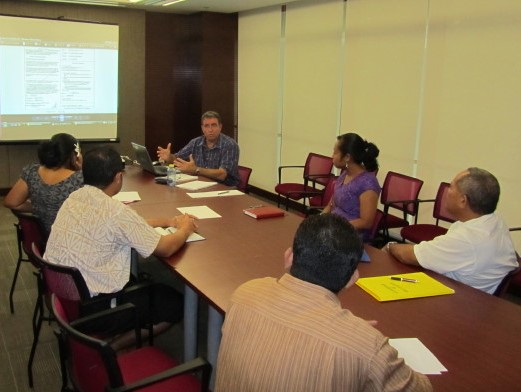
  1. Visits to each of the 3 pilot countries to observe the operation of the customised SOLA based systems and hold discussions with SOLA pilot country coordinators, registration and cadastre staff within the host land administration agencies and members of the SOLA pilot Customisation Teams.
  2. Reviewing the future need for external (out of country) support for the pilot implementations and making recommendations as to how that support may be provided
  3. A visit to Rome for discussions with FAO staff members (including the SOLA project coordinator and centrally based SOLA developer who have supported the Customisation Teams in the pilot countries).
  4. Reviewing project documentation with particular attention to the progress made in meeting the recommendations of the SOLA Project Mid Term Review and the documentation and training material prepared for the pilot implementations;
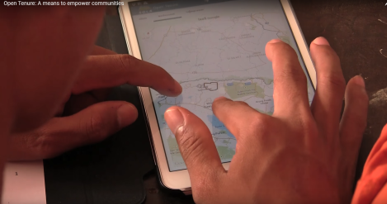
  5. An assessment of proposals to extend the SOLA software including but not limited to support for Mass Property Valuation, State Land Administration and Crowd Sourcing;
  6. Identification of key measures to further strengthen the sustainability of the SOLA software; and
  7. The preparation of  SOLA Pilots Technical Review reports identifying key issues raised through the consultant’s assessment of the SOLA pilot customisation’s and implementations with recommendations as to how the generic SOLA software and the SOLA customisation process can be strengthened.

Related Projects

Digitalization of Nepal’s Land Administration Sector

A well-functioning land administration system is essential for economic stability, social justice, environmental sustainability, and effective governance. Despite significant policy reform efforts by the Government of Nepal, limited capacity has challenged the integration of cadastre and land registry data, systems, and institutions to improve service delivery. For this project, LEI partnered with Kadaster International and RajDevi Engineering Consultants to support the Digitalization of Nepal’s Land Administration Sector.

LEI provided technical assistance for the World Bank and Government of Nepal to support the digitalisation and decentralisation of Nepal’s land administration system, as well as the establishment of an

Global Land Facility Programme

LEI are partnering with lead, Tetra Tech, in the implementation of the Land Facility program, funded by the UK FCDO. The Land Facility (LF) is designed as an offer to partner countries with a UK post, to co-design effective programs of land related reform. It can provide rural, forestry and urban land governance expertise and assistance to support partner governments’ efforts to expand their capacity to plan, manage and implement national land administration policy, legislation and system reforms.

Project Narrative Effective land governance systems are key to economic growth, rural livelihoods, climate change resilience, and women’s rights. Land is a key root cause of conflict, with increasing competition

Vanuatu Land Development, Greater Port Vila Infrastructure, Affordable Housing Vanuatu, Resilient Settlements Development, VARS Project Vanuatu, Land Development Strategy Vanuatu, Housing for Low-Income Earners Vanuatu, Vanuatu Urban Planning, Informal Settlements Upgrading, Flood Mitigation Vanuatu, Vanuatu Land Administration, Greenfield Residential Development, Public-Private Partnerships Vanuatu, Vanuatu Land Policy Advisory, Vanuatu Land Development Legal Services, Community Trusts Vanuatu, Sustainable Urban Growth Vanuatu, Vanuatu Infrastructure Development, Land Subdivision Vanuatu, Vanuatu Government Land Development

Vanuatu Affordable and Resilient Settlements (VARS) Project: Land Development Policy, Legal and Marketing Advisory Services

We contributed to the World Bank’s VARS project (US$25 million) by supporting the efficient and affordable supply of resilient housing in low hazard, peri-urban areas in Greater Port Vila.

Project Narrative The overarching development objectives of VARS are to (i) improve access to and resilience of infrastructure and services in selected new and existing settlements, and (ii) strengthen land

In spirit of reconciliation, Land Equity International acknowledges the Traditional Custodians of country throughout Australia and their connections to land, sea, and community. We pay respects to their Elders past and present and extend that respect to all Aboriginal and Torres Strait Islander people.