+
And so we make it to the end of another busy year! This past six months in particular have been marked with important milestones, years in the making, that bring me great satisfaction and a sense of pride, that I hope is shared by the rest of our team and our valued colleagues.
Renée Chartres, our Senior Land and Legal Specialist, shares her thoughts on urban land management and its many linkages with climate and other critical socio-political issues.
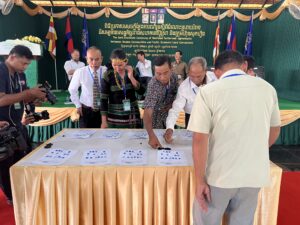
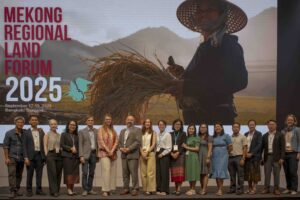
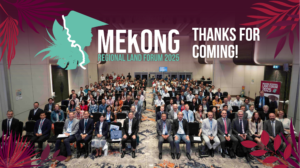
In September 2025, the 4th Mekong Regional Land Forum brought together more than 450 participants in person and online to reflect on the future of land governance in the Mekong region.
An interview with Brian Garcia, LEI associate and current Team Leader for our team providing technical assistance in Nepal.
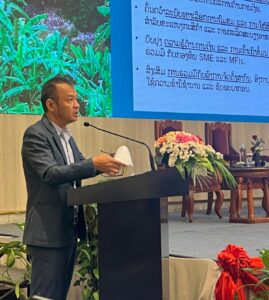
TLI focuses on three interrelated pathways: investors, the national business ecosystem and the global and regional development community, employing a multi-tiered approach to change investor practices and enabling environments at all levels. The Project utilises a variety of tools and methods to do this including the development of tech tools like the Risk-Reward Model and regular cross-sectoral events, as Dr. Boupha references below. The end product of this is to promote and incentivise transformation and alignment with TLI practices.
From the middle of winter here in Australia and our financial year just closing, welcome to a mid-year operations update from the team. Our January 2025 LEI newsletter was shared 2 weeks prior to the unprecedented stop work order issued to our Lesotho Land and Gender consultancy. Our team was deep in planning for another round of community and household meetings addressing new issues of land inheritance, trialing a newly established grievance mechanism and educating communities about more gender inclusive practices for decision making. Abruptly stopping the work was devastating. Communities’ expectations were raised. Numerous stakeholders were left stranded on a learning curve of land rights and inheritance discussions and social and behavioural change actions. The team’s desire and passion to ignite a new economy, food security and rural development opportunity to their fellow citizens was quashed in a moment. We can only hope that such long negotiations are an indication of a way through and not a way out.
On 17th December 2024 around midday, a 7.3 magnitude earthquake struck just 30 km away from Vanuatu’s capital city of Port Vila. No stranger to disasters, the nation has weathered three major cyclones in 2023 alone. But recovery from this impact has felt a little different. 14 people tragically lost their lives, and an estimated 80,000 people were impacted nationally. Some six months on, parts of the CBD still remain closed to the public as the reconstruction effort continues: many roads still require repair and demolition of unsafe buildings is ongoing. And new urban paradigms are emerging, with many businesses relocating ‘to the suburbs’ – with no intent to return.
The world of land tenure and administration is also constantly evolving, influenced by political change, climate disruption, and technological evolution. Global official development assistance (ODA) fell in 2024 for the first time in five years, dropping by 7.1% as donor countries shifted their priorities inward and scaled back commitments. Although some countries – like Korea, Portugal, and Belgium – increased their contributions, the overall decline highlights an alarming recalibration in donor country priorities. Over the course of 2025, we will need to remain vigilant and flexible as the global development community reacts to these readjusted priorities and the growing questions around the value and effectiveness of bilateral aid.
Our Research and Communications Officer Naia Webb reflects on her time at the FIG international conference in Brisbane this April. As a geospatial newbie, she had plenty to learn, and was keen to hear about where industry leaders think the profession is, and should be headed.
In this interview, Nik Regenvanu, LEI's Team Leader of the Vanuatu Affordable and Resilient Settlements (VARS) project, shares insights into his work addressing housing and land tenure challenges in Port Vila. With a background in banking, finance, and governance across the Pacific, Nik discusses the progress of the VARS project, its role in tackling affordable housing and secure land tenure, and the impact of the December 2024 earthquake on the region. He highlights the importance of collaborative efforts between the government, private sector, and communities in creating sustainable and resilient settlements for the future. Nik also discusses the critical role of financial institutions in facilitating affordable housing development, the need for long-term resilience planning, and his vision for Vanuatu's urban growth beyond the immediate recovery efforts. The VARS project, supported by the World Bank and Vanuatu's government, is seen as a potential model for similar initiatives across the Pacific, contributing to the region's long-term stability and development.
Good land registration is crucial for sustainable land management and securing land rights in Lesotho. It ensures clear ownership, resolves disputes, and protects tenure security. Overcoming challenges like women's land rights and high registration costs can foster fairer, more transparent land systems.
Lineo Rakaibe is a gender expert working with LEI in Lesotho. She writes from her previous experience as a District Gender Officer under the Ministry of Gender, Youth and Social Development, and more recently as a Senior Gender and Social Inclusion Expert on the Land and Gender consultancy, part of the Market Driven Irrigated Horticulture (MDIH) project, which falls under the Millenium Challenge Corporation Lesotho Compact.
In spirit of reconciliation, Land Equity International acknowledges the Traditional Custodians of country throughout Australia and their connections to land, sea, and community. We pay respects to their Elders past and present and extend that respect to all Aboriginal and Torres Strait Islander people.