
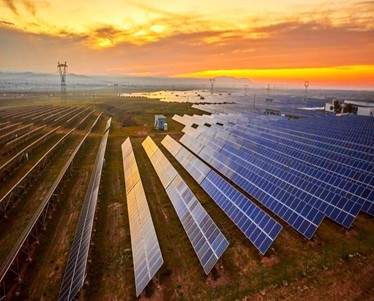
Enhancing Renewable Energy Investments and Access to Land in Bangladesh

Bangladesh renewable energy, RE investments Bangladesh, solar energy Bangladesh, land access for renewable energy, utility scale solar Bangladesh, renewable energy capacity Bangladesh, solar park investments Bangladesh, land suitability for RE, energy site identification Bangladesh, land administration Bangladesh, solar energy development Bangladesh, land acquisition for RE, energy sector PPP Bangladesh, Build Operate Own PPPs, land records Bangladesh, energy land planning, energy development land issues, land identification for RE, multi-criteria decision-making tool, energy site feasibility Bangladesh, land repurposing for RE, coal power plant repurposing, RE land development Bangladesh, renewable energy transmission, land administration framework Bangladesh, renewable energy planning Bangladesh, geospatial analysis RE sites, solar park land allocation, renewable energy capacity development, solar energy project planning

Project details

Country

Client

Project Timeframe

Key Services

Project Key Information

With ambitious renewable energy plans for Bangladesh, access to land suitable for RE development is crucial and is among the main reasons why solar energy penetration at scale has lagged.

Bangladesh has set ambitious plans and targets for renewable energy (RE), seeking to generate more than 2000 MW a year. Currently the country’s RE capacity is just 750 MW, and it largely stems from small solar home systems. Utility scale solar requires large amounts of land and acquiring or leasing large areas of land is challenging particularly given the dense population, food security concerns and respecting the policy not to use agricultural land for other purposes. A strategy is in place to direct solar park investments to vacant, marginalised, and fallow government and private owned lands leveraging in particular Build Operate Own (BOO) PPPs with Independent Power Producers (IPP).

Access to land is difficult to navigate due to disconnected legal and revenue land records, informal land market and outdated revenue records and settlement maps. Poor records and informality therefore hamper not only energy projects but all planning, investment, development, and land revenue flow in Bangladesh.

The objective of this project is to analyze and strengthen the government’s capacity to identify suitable sites for RE investments, especially solar, and secure access to these land sites by analyzing the relevant land administration framework in Bangladesh, and develop and test a methodology to identity, allocate and access land suitable for RE investments.

LEI will be responsible for the following three components:

  • Component 1: Access to Land for Renewable Energy Investments
    LEI will analyse the current situation of access to land in Bangladesh for energy investments, in particular RE. LEI will conduct a desk review, meet with various government officials, and review the legal and institutional arrangements at different levels of government. LEI will examine the zoning requirements, access stakeholders, land suitability, processes, and risks involved in developing RE at utility scale (with a focus on solar energy). Based on this analysis recommendations will be provided for sectorial and cross sectorial actions to improve access to land for RE investments.
  • Component 2: Systematic Energy Site Identification Pilot
    Completing a methodology for a multi-criteria decision-making tool will be tested to systematically identify large areas of land suitable for RE in Bangladesh. The suitability of locations will be measured according to social, environmental and RE power requirements (generation, transmission, and distribution) as well as factors of accessibility, costs, and risks. The results will inform decision makers, providing preliminary indications of site feasibility.
  • Component 3: Repurposing of Coal Power Plant Sites for RE
    LEI will conduct a detailed analysis of land for up to 10 cancelled coal power plants to determine how suitable the land is for RE development.  A multi-criteria decision-making tool with geospatial analysis capabilities will be developed to evaluate how suitable each site is for RE investment. This will take into account identifying and examining any land planned for ancillary facilities and additional adjacent land areas that could potentially be developed for RE and providing site specific recommendations for necessary enhancements. Site conceptual layouts, RE transmission readiness, seeking a social license to operate and PPP readiness options will be prepared. Key stakeholder consultations and training on the multi-criteria decision-making tool will take place.

Related Projects

Global Land Facility Programme

LEI are partnering with lead, Tetra Tech, in the implementation of the Land Facility program, funded by the UK FCDO. The Land Facility (LF) is designed as an offer to partner countries with a UK post, to co-design effective programs of land related reform. It can provide rural, forestry and urban land governance expertise and assistance to support partner governments’ efforts to expand their capacity to plan, manage and implement national land administration policy, legislation and system reforms.

Project Narrative Effective land governance systems are key to economic growth, rural livelihoods, climate change resilience, and women’s rights. Land is a key root cause of conflict, with increasing competition

Vanuatu Land Development, Greater Port Vila Infrastructure, Affordable Housing Vanuatu, Resilient Settlements Development, VARS Project Vanuatu, Land Development Strategy Vanuatu, Housing for Low-Income Earners Vanuatu, Vanuatu Urban Planning, Informal Settlements Upgrading, Flood Mitigation Vanuatu, Vanuatu Land Administration, Greenfield Residential Development, Public-Private Partnerships Vanuatu, Vanuatu Land Policy Advisory, Vanuatu Land Development Legal Services, Community Trusts Vanuatu, Sustainable Urban Growth Vanuatu, Vanuatu Infrastructure Development, Land Subdivision Vanuatu, Vanuatu Government Land Development

Vanuatu Affordable and Resilient Settlements (VARS) Project: Procurement of Land Development Policy, Legal and Marketing Advisory Services

The International Development Agency of the World Bank Group is supporting the Government of Vanuatu (GoV) with the Vanuatu Affordable and Resilient Settlements Project (VARS) in an amount of US$25 million, to achieve a long-term vision to provide potable water, sanitation, roads, drainage, and electricity to low-income households.

Project Narrative The overarching development objectives of VARS are to (i) improve access to and resilience of infrastructure and services in selected new and existing settlements, and (ii) strengthen land

Lesotho 2 Compact, Millennium Challenge Corporation, MCC Lesotho, Lesotho economic growth, Lesotho Land and Gender Activity, Market Driven Irrigation Horticulture, MDIH Project Lesotho, rural income improvement Lesotho, irrigation infrastructure Lesotho, commercial horticulture Lesotho, gender equity Lesotho, Lesotho irrigation systems, rural land registration system, gender reforms Lesotho, smallholder farmers Lesotho, anchor farmer Lesotho, irrigation scheme development, land use planning Lesotho, rural land market Lesotho, landholder rights Lesotho, Community Councils Lesotho, land registration Lesotho, Lesotho resettlement services, commercial farming partnerships Lesotho, Tetra Tech consultancy, Land Equity International, Lesotho agriculture projects, rural livelihoods Lesotho, agricultural production agreements, Lesotho land reforms

Market Driven Irrigation Horticulture (MDIH) Land and Gender Activity

The Lesotho II Compact was an agreement between the US government-funded Millenium Challenge Corporation (MCC) and the Kingdom of Lesotho (GoL). It was a $US300 million programme to address binding constraints to economic growth in Lesotho. The Lesotho II compact consisted of three projects designed to combat constraints to economic growth by either strengthening private sector participation and/or by improving government coordination, capacity and execution.

Project Narrative The Lesotho Land and Gender activity (L&G Activity), supported the Lesotho Millennium Challenge Account-II (MCA-Lesotho II) to meet the objectives of the Market Driven Irrigation Horticulture (MDIH) Project

In spirit of reconciliation, Land Equity International acknowledges the Traditional Custodians of country throughout Australia and their connections to land, sea, and community. We pay respects to their Elders past and present and extend that respect to all Aboriginal and Torres Strait Islander people.