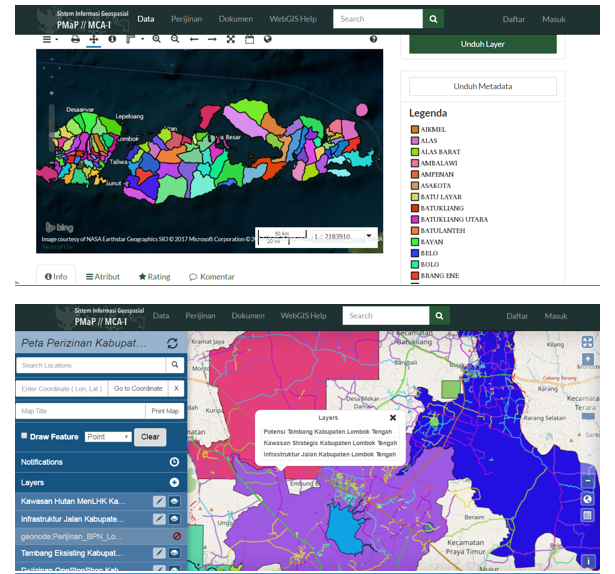
Participatory Mapping and Planning (PMaP) 2

Project details

Country

Client

Project Timeframe

Key Services

Project Key Information

Building local government capacity in spatial planning across nine districts.

Project Narrative

In late 2008, Indonesia was selected by the Millennium Challenge Corporation (MCC) Board of Directors as a country eligible for a compact. The Government of Indonesia (GoI; through the National Development Planning/National Development Planning Agency (BAPPENAS)), was responsible for coordinating the development and implementation of the Compact (MCA), which covered three key programs, one of which was the Green Prosperity (GP) Project. The Compact implemented gender activities, environmental assessments and social assessments to support program implementation. Projects such as these responded to constraints to economic growth and were priorities in the GoI’s national development strategy. The GoI also made a commitment to reduce greenhouse gas emissions by 26 percent by 2020, while maintaining a target of seven percent annual economic growth.

The GP Project consisted of four procurement activities: (1) Participatory Land Use Planning Activity (PLUP); (2) Technical Assistance and Oversight Activity; (3) GP Facility Activity, and (4) Green Knowledge Activity. PMaP2 is the second project in a series of eight PLUP sub-activity projects. It covered three main tasks:

  • Task 2: Acquisition of geo-spatial data and preparation of geographic information system (GIS) databases on land use/land cover
  • Task 3: Compilation and geo-referencing of existing and pending licences and permits for land and natural resource use, and
  • Task 4: Enhancing district spatial plans through capacity building in spatial planning, enforcement and management of land use information in spatially-enabled databases.

PMaP2 was undertaking capacity building activities with local government in nine districts across three provinces (Kerinci, Tanjung Jabung Timur – Jambi Province; Lombok Utara, Lombok Tengah, Lombok Timur – NTB Province; Sumba Timur, Sumba Tengah, Sumba Barat, and Sumba Barat Daya – NTT Province). The aim was for spatial information and technology to be more effectively used to develop spatial plans. In particular, this spatial planning incorporated low carbon/renewable energy activities in these plans.

Key services provided:

  • Collection, collation and analysis of geospatial information for nine target districts
  • Development of a simple GIS-based information management system (including hardware, software, web-based access and customisation)
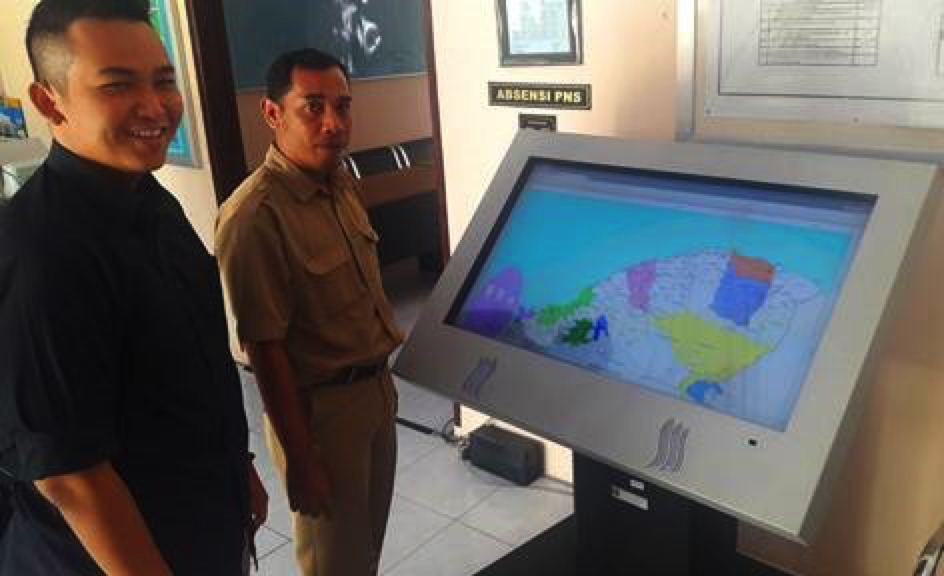
  • Local staff capacity building to effectively use system data – through formal training and on-site mentoring
  • Local staff capacity building to develop and improve spatial plans, in accordance with national regulations and to incorporate renewable energy investments
  • Stakeholder analysis and development of activities and processes to ensure women and disadvantaged are included and have access to information
  • Development of a system to support licensing associated with new investment activities – agricultural, mining, tourism
  • Supporting “One-Stop-Shops” for investors
  • Undertake a review of laws, regulations and legal issues impacting efficient spatial planning and investment.
Related Projects

Digitalization of Nepal’s Land Administration Sector

A well-functioning land administration system is essential for economic stability, social justice, environmental sustainability, and effective governance. Despite significant policy reform efforts by the Government of Nepal, limited capacity has challenged the integration of cadastre and land registry data, systems, and institutions to improve service delivery. For this project, LEI partnered with Kadaster International and RajDevi Engineering Consultants to support the Digitalization of Nepal’s Land Administration Sector.

LEI provided technical assistance for the World Bank and Government of Nepal to support the digitalisation and decentralisation of Nepal’s land administration system, as well as the establishment of an

Global Land Facility Programme

LEI are partnering with lead, Tetra Tech, in the implementation of the Land Facility program, funded by the UK FCDO. The Land Facility (LF) is designed as an offer to partner countries with a UK post, to co-design effective programs of land related reform. It can provide rural, forestry and urban land governance expertise and assistance to support partner governments’ efforts to expand their capacity to plan, manage and implement national land administration policy, legislation and system reforms.

Project Narrative Effective land governance systems are key to economic growth, rural livelihoods, climate change resilience, and women’s rights. Land is a key root cause of conflict, with increasing competition

Vanuatu Land Development, Greater Port Vila Infrastructure, Affordable Housing Vanuatu, Resilient Settlements Development, VARS Project Vanuatu, Land Development Strategy Vanuatu, Housing for Low-Income Earners Vanuatu, Vanuatu Urban Planning, Informal Settlements Upgrading, Flood Mitigation Vanuatu, Vanuatu Land Administration, Greenfield Residential Development, Public-Private Partnerships Vanuatu, Vanuatu Land Policy Advisory, Vanuatu Land Development Legal Services, Community Trusts Vanuatu, Sustainable Urban Growth Vanuatu, Vanuatu Infrastructure Development, Land Subdivision Vanuatu, Vanuatu Government Land Development

Vanuatu Affordable and Resilient Settlements (VARS) Project: Land Development Policy, Legal and Marketing Advisory Services

We contributed to the World Bank’s VARS project (US$25 million) by supporting the efficient and affordable supply of resilient housing in low hazard, peri-urban areas in Great Port Vila.

Project Narrative The overarching development objectives of VARS are to (i) improve access to and resilience of infrastructure and services in selected new and existing settlements, and (ii) strengthen land

In spirit of reconciliation, Land Equity International acknowledges the Traditional Custodians of country throughout Australia and their connections to land, sea, and community. We pay respects to their Elders past and present and extend that respect to all Aboriginal and Torres Strait Islander people.