
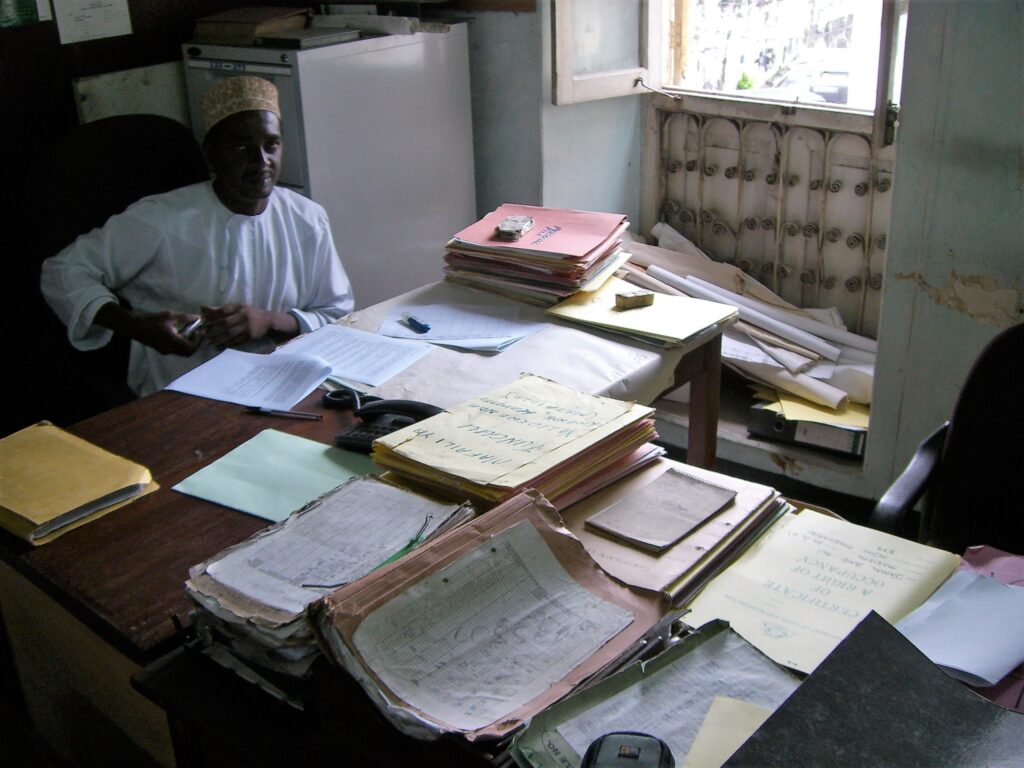
Review and Update of the Strategic Plan for Implementation of Land Laws (SPILL)

Project details

Country

Client

Project Timeframe

Key Services

Project Narrative

In 2005, the MLHHSD finished preparing a Strategic Plan for Implementation of Land Laws (SPILL). It was prepared to provide a broad framework for the implementation of Land Act No.4 of 1999, Village Land Act No. 5 of 1999 and Land Disputes Courts Act No. 2 of 2002. A Land Reform Program was designed to support key activities of SPILL to facilitate development of a competitive domestic private sector. Support was provided to more urgent activities identified for implementation in the first five years of the 10-year term of the SPILL.

Objectives included:

  • Developing efficient land registration and administration services by re-engineering and computerising land registration processes and workflows
  • Strengthening dispute resolution mechanisms
  • Improving the infrastructure for surveying, mapping, and registration, and
  • Decentralising land administration services at the district and village levels in about 15 districts.

Key services provided

Our team undertook extensive research, review and consultation to provide a review of the SPILL (2005) and, identified priority areas for implementation during a 10-year period. More details were provided in the initial five years to enable the completion of on-going initiatives, scale up recent pilot projects, and take advantage of the newly-established geodetic network and the coming Integrated Land Information Management System (ILMIS). A key part of the review was an assessment of the SPILL (2005), documentation of experiences gained during its implementation, changes that had taken place, and proposed improvements in the underlying land-related laws.

We worked closely with MLHHSD. As a roadmap for the development of the Land Sector in mainland Tanzania, SPILL (2013) was developed with wide consultation as a comprehensive vision and action plan. It also provided information on prioritisation and sequencing of activities (considering known constraints and resource challenges). It considered various costings and financing arrangements for sustainable implementation and identified priority areas and activities to assist the Government of Tanzania achieve its broader development goals of poverty reduction, agricultural transformation, and good governance.

Related Projects

Global Land Facility Programme

LEI are partnering with lead, Tetra Tech, in the implementation of the Land Facility program, funded by the UK FCDO. The Land Facility (LF) is designed as an offer to partner countries with a UK post, to co-design effective programs of land related reform. It can provide rural, forestry and urban land governance expertise and assistance to support partner governments’ efforts to expand their capacity to plan, manage and implement national land administration policy, legislation and system reforms.

Project Narrative Effective land governance systems are key to economic growth, rural livelihoods, climate change resilience, and women’s rights. Land is a key root cause of conflict, with increasing competition

Vanuatu Land Development, Greater Port Vila Infrastructure, Affordable Housing Vanuatu, Resilient Settlements Development, VARS Project Vanuatu, Land Development Strategy Vanuatu, Housing for Low-Income Earners Vanuatu, Vanuatu Urban Planning, Informal Settlements Upgrading, Flood Mitigation Vanuatu, Vanuatu Land Administration, Greenfield Residential Development, Public-Private Partnerships Vanuatu, Vanuatu Land Policy Advisory, Vanuatu Land Development Legal Services, Community Trusts Vanuatu, Sustainable Urban Growth Vanuatu, Vanuatu Infrastructure Development, Land Subdivision Vanuatu, Vanuatu Government Land Development

Vanuatu Affordable and Resilient Settlements (VARS) Project: Procurement of Land Development Policy, Legal and Marketing Advisory Services

The International Development Agency of the World Bank Group is supporting the Government of Vanuatu (GoV) with the Vanuatu Affordable and Resilient Settlements Project (VARS) in an amount of US$25 million, to achieve a long-term vision to provide potable water, sanitation, roads, drainage, and electricity to low-income households.

Project Narrative The overarching development objectives of VARS are to (i) improve access to and resilience of infrastructure and services in selected new and existing settlements, and (ii) strengthen land

Lesotho 2 Compact, Millennium Challenge Corporation, MCC Lesotho, Lesotho economic growth, Lesotho Land and Gender Activity, Market Driven Irrigation Horticulture, MDIH Project Lesotho, rural income improvement Lesotho, irrigation infrastructure Lesotho, commercial horticulture Lesotho, gender equity Lesotho, Lesotho irrigation systems, rural land registration system, gender reforms Lesotho, smallholder farmers Lesotho, anchor farmer Lesotho, irrigation scheme development, land use planning Lesotho, rural land market Lesotho, landholder rights Lesotho, Community Councils Lesotho, land registration Lesotho, Lesotho resettlement services, commercial farming partnerships Lesotho, Tetra Tech consultancy, Land Equity International, Lesotho agriculture projects, rural livelihoods Lesotho, agricultural production agreements, Lesotho land reforms

Market Driven Irrigation Horticulture (MDIH) Land and Gender Activity

The Lesotho II Compact was an agreement between the US government-funded Millenium Challenge Corporation (MCC) and the Kingdom of Lesotho (GoL). It was a $US300 million programme to address binding constraints to economic growth in Lesotho. The Lesotho II compact consisted of three projects designed to combat constraints to economic growth by either strengthening private sector participation and/or by improving government coordination, capacity and execution.

Project Narrative The Lesotho Land and Gender activity (L&G Activity), supported the Lesotho Millennium Challenge Account-II (MCA-Lesotho II) to meet the objectives of the Market Driven Irrigation Horticulture (MDIH) Project

In spirit of reconciliation, Land Equity International acknowledges the Traditional Custodians of country throughout Australia and their connections to land, sea, and community. We pay respects to their Elders past and present and extend that respect to all Aboriginal and Torres Strait Islander people.