Project Narrative
The objectives of the project are to improve land tenure security; develop transparent and efficient land administration institutions at the national and provincial levels; and improve government capacity to provide social and economic services through a broader revenue base from property related fees and taxes. Specific project activities are as follows:
- Assist with development of legislation required to support the various project activities;
- Strengthen institutional capacity and project management;
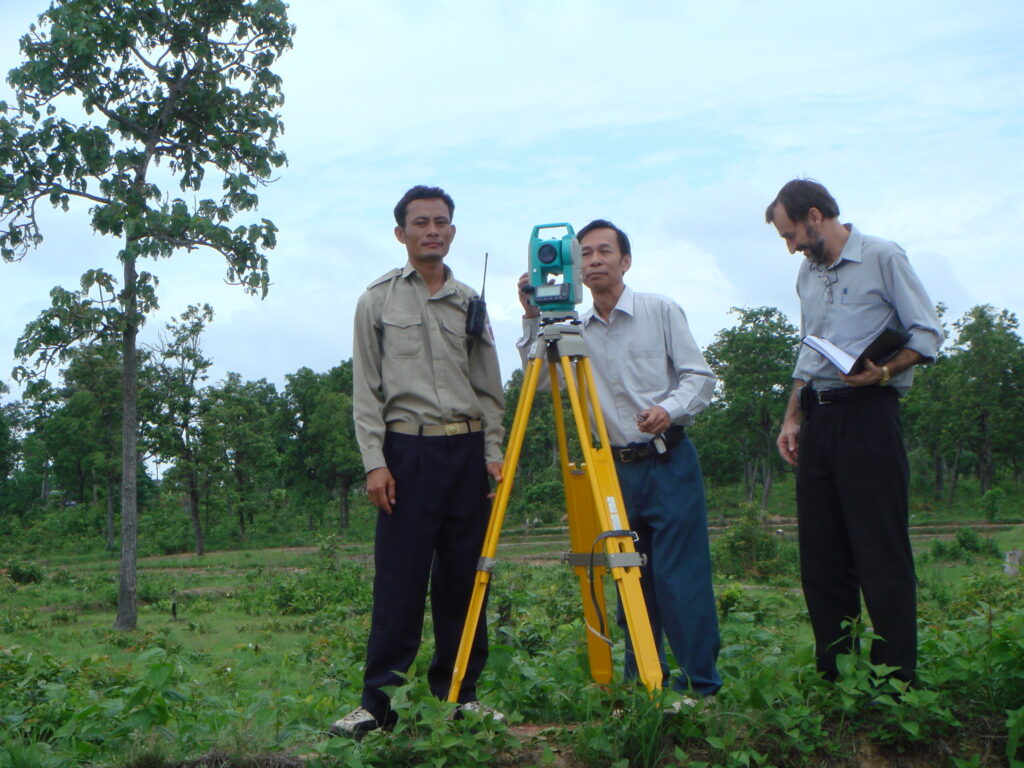
- Accelerate land titling through systematic registration covering rights adjudication, boundary adjudication and cadastral surveying;
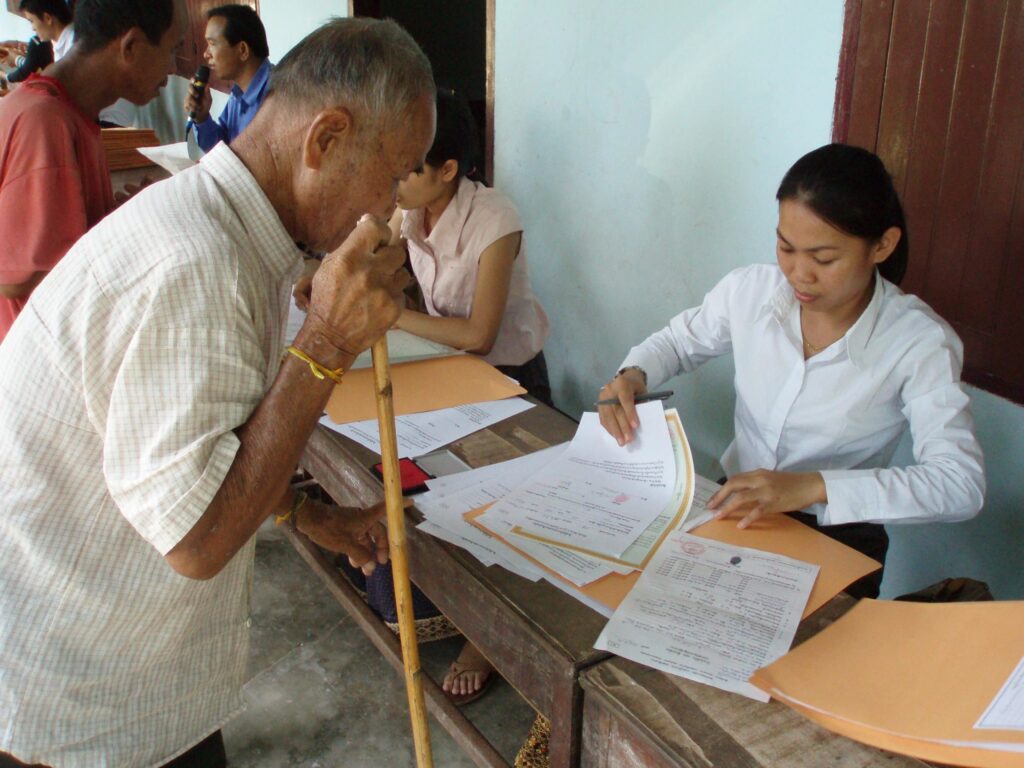
- Develop and implement an efficient and transparent land registration system;
- Improve community education, community awareness;
- Develop support for vulnerable groups and ensure gender equity (protection property rights of women);
- Strengthen the land valuation system;
- Develop M&E framework and M&E tools; and
- Support the development of tertiary education systems aimed at achieving sustainable land administration systems.
Key services provided
As project manager, LEI provided effective management to deliver the outcomes required by the Government of Lao PDR and the funding agencies of AusAID and the World Bank. LEI managed the technical assistance inputs and an illustration of activities include the following:
- Effective community education and public awareness campaigns with a specific focus on gender equity. In Lao PDR men and women are equally entitled to hold and register land. The project sought to raise women’s awareness of their rights in relation to land registration. This was achieved through the development of a formal arrangement with the Lao Women’s Union (LWU) to co-implement project meetings at village level and providing targeted information on gender issues associated with land. The LWU actively participated in the project to help protect the rights of women and ethnic groups. Equity in land titling was achieved, with 34% of titles issued in the name of women and 23% in the name of men. Land was also registered jointly in the name of men and women amounted to 24%.
- First-time systematic land titling system developed. Since the commencement of systematic registration or first-time land registration activities in 1997, the project has been able to register in excess of 550,000 land parcels. The process has progressively expanded to all 17 provinces of Lao PDR. At the peak a total of 640 field staff were involved in systematic registration activities – rights adjudication and cadastral surveying.
- Created a sustainable land registration system at central and provincial levels. Developed a model land office concept in Vientiane Capital City for piloting of land office and land registration operations.
- Support for the development of a property valuation system for registration. A manual and computer based valuation system was developed to provide a fair and equitable means of determining taxes for property transactions.
- Revenue Generation – The project was successful in increasing revenue resulting from subsequent registration activities. In 2002/03 the total revenue generated through land registration was Kip 4,273 million (approx A$777,000) and in 2007/08 this had increased to Kip 18,852 million (approx A$2,513,600) or a 340% increase in revenue over a six year period.
- Support for tertiary education. Since the commencement of the High Diploma in Surveying and Land Administration through the Polytechnic College in 2002-2003, by 2009 a total of 489 students had commenced the course of which 162 or 33% were women. In the last two intakes of 27 students and 37 students the percentage of women have been 56% and 57% respectively. The Polytechnic College have since developed a Degree in Surveying and Land Administration and the project had supported the development of the concept of articulated education for land sector education which has been adopted as a model throughout the tertiary education sector in Lao PDR.
- Monitoring and Evaluation program – An extensive M&E Framework was developed along with extensive M&E tools for appropriate project monitoring and project improvement.
- Regulations, procedures and work manuals were prepared for all components of the project that were regularly audited and updated.
- Extensive training was provided to enable the successful implementation of new methodologies.