Support to Strengthening Property Rights Project

Project details

Country

Client

Project Timeframe

Key Services

Project Key Information

Supported and provided technical assistance for the Land Administration (Cadastral, Registration and Land Titling System) component of the Strengthening Property Rights in Timor-Leste (SPRTL) Project.

Project Narrative

As the people of Timor Leste began to build an independent future, they were moving forward with two critical aspects—reducing conflict and clarifying land rights—to help restore buildings, commerce, infrastructure, and livelihoods lost in the conflict. This project was part of a five year project to clearly articulate a land policy, legal framework, and administrative structure to secure the rights of all East Timorese to land, property, and natural resources. The project formed the basis of the Strengthening Property Rights in Timor-Leste (SPRTL) Project that was working with the GoTL to establish a mechanism for strengthening property rights, informing people of these rights through public information campaigns, collecting claims to land rights, and supporting the mediated settlement of land-related disputes.

This project comprised five tasks to advance the above objectives: 1) Public Information Awareness/Increased Transparency; 2) Land Policy Laws and Implementing Regulations; 3) Support to a National Land Commission (NLC); 4) Land Administration (Cadastral, Registration, and Land Titling System); and 5) Dispute Resolution, Mediation, and Processes for Competing Claims to Land.

LEI are responsible for Task 4: Land Administration and Information – Land Cadastral Registration and Titling System. This involved designing a land/claims registration and survey system for Timor Leste.

Key services provided

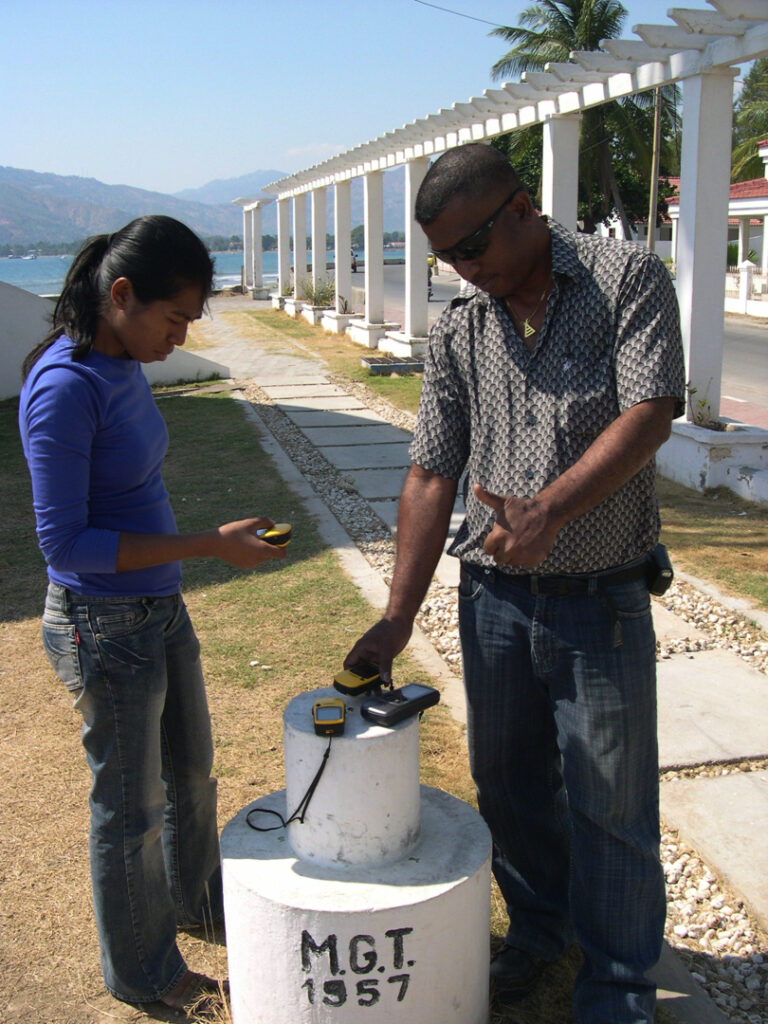
In year one, the team undertook training and set up the technology tools, procedures, and systems for claims registration and dispute mediation. Pilot operation began in November 2008 to collect land claims in two districts, and with urging of the GoTL, the project was requested to expand this work to a nationwide program. Reports from the field clearly demonstrated that public information campaigns were energising government and people, land collection was engaging individuals and communicates in establishing their property claims, and USAID programs were accelerating and smoothing the transition from conflict to peace.

In the second year, beginning in late 2008, the project began claims recording in two pilots, emphasising transparency, consistency with the law, continued PIA activities, and the application of dispute resolution resources. In years three and four, the project began nationwide claims processing and maintaining those claims as they changed naturally from transactions, inheritance, and dispute resolution, and converting those claims to registered titles according to Timorese law. These years were also spent building administrative capacity within the Government of Timor-Leste (GOTL) institutions responsible for administration of property rights according to law with a five year goal of registering and titling (if law allows) at least 50,000 claims/properties.

LEI were responsible for the project management of Task 4. LEI provided technical assistance, liaised with the government and client, and ensured the quality control of outputs. Specific tasks included:

  • Developing a methodology for registering land claims in a post conflict environment when the land laws are still incomplete and have not been promulgated.
  • Identifying the technical requirements necessary to establish a land/claims registration system.
  • Designing the technical configuration and specifying the system elements required for the collection and transmission of land and claims data by mobile offices.
  • Designing the technical configuration and specify the system for the SPRTL central office database and information retrieval system.
  • Enabling the system of land/claims registration to record changes in rights and to be tied to a land title cadastre.
Related Projects

Global Land Facility Programme

LEI are partnering with lead, Tetra Tech, in the implementation of the Land Facility program, funded by the UK FCDO. The Land Facility (LF) is designed as an offer to partner countries with a UK post, to co-design effective programs of land related reform. It can provide rural, forestry and urban land governance expertise and assistance to support partner governments’ efforts to expand their capacity to plan, manage and implement national land administration policy, legislation and system reforms.

Project Narrative Effective land governance systems are key to economic growth, rural livelihoods, climate change resilience, and women’s rights. Land is a key root cause of conflict, with increasing competition

Vanuatu Land Development, Greater Port Vila Infrastructure, Affordable Housing Vanuatu, Resilient Settlements Development, VARS Project Vanuatu, Land Development Strategy Vanuatu, Housing for Low-Income Earners Vanuatu, Vanuatu Urban Planning, Informal Settlements Upgrading, Flood Mitigation Vanuatu, Vanuatu Land Administration, Greenfield Residential Development, Public-Private Partnerships Vanuatu, Vanuatu Land Policy Advisory, Vanuatu Land Development Legal Services, Community Trusts Vanuatu, Sustainable Urban Growth Vanuatu, Vanuatu Infrastructure Development, Land Subdivision Vanuatu, Vanuatu Government Land Development

Vanuatu Affordable and Resilient Settlements (VARS) Project: Procurement of Land Development Policy, Legal and Marketing Advisory Services

The International Development Agency of the World Bank Group is supporting the Government of Vanuatu (GoV) with the Vanuatu Affordable and Resilient Settlements Project (VARS) in an amount of US$25 million, to achieve a long-term vision to provide potable water, sanitation, roads, drainage, and electricity to low-income households.

Project Narrative The overarching development objectives of VARS are to (i) improve access to and resilience of infrastructure and services in selected new and existing settlements, and (ii) strengthen land

Lesotho 2 Compact, Millennium Challenge Corporation, MCC Lesotho, Lesotho economic growth, Lesotho Land and Gender Activity, Market Driven Irrigation Horticulture, MDIH Project Lesotho, rural income improvement Lesotho, irrigation infrastructure Lesotho, commercial horticulture Lesotho, gender equity Lesotho, Lesotho irrigation systems, rural land registration system, gender reforms Lesotho, smallholder farmers Lesotho, anchor farmer Lesotho, irrigation scheme development, land use planning Lesotho, rural land market Lesotho, landholder rights Lesotho, Community Councils Lesotho, land registration Lesotho, Lesotho resettlement services, commercial farming partnerships Lesotho, Tetra Tech consultancy, Land Equity International, Lesotho agriculture projects, rural livelihoods Lesotho, agricultural production agreements, Lesotho land reforms

Market Driven Irrigation Horticulture (MDIH) Land and Gender Activity

The Lesotho II Compact was an agreement between the US government-funded Millenium Challenge Corporation (MCC) and the Kingdom of Lesotho (GoL). It was a $US300 million programme to address binding constraints to economic growth in Lesotho. The Lesotho II compact consisted of three projects designed to combat constraints to economic growth by either strengthening private sector participation and/or by improving government coordination, capacity and execution.

Project Narrative The Lesotho Land and Gender activity (L&G Activity), supported the Lesotho Millennium Challenge Account-II (MCA-Lesotho II) to meet the objectives of the Market Driven Irrigation Horticulture (MDIH) Project

In spirit of reconciliation, Land Equity International acknowledges the Traditional Custodians of country throughout Australia and their connections to land, sea, and community. We pay respects to their Elders past and present and extend that respect to all Aboriginal and Torres Strait Islander people.