Development of ICT Strategy and Technical Quality Review of Lao LandReg

systematic land registration, Lao Land Registry, LLREG Laos, modernizing land services Laos, land information infrastructure, ICT in land management, land-based services Laos, tenure security Lao PDR, land registration efficiency, land transaction systems, land service delivery Laos, ICT deployment land sector, Laos land sector improvements, ICT strategy Laos, Lao PDR land services, LLREG functionality, LLREG audit, land registration software analysis, technical quality audit LLREG, ICT action plan Laos, business process review Laos, LADM compliance, data model land registration, land registry systems Laos, land software testing, sustainable ICT deployment Laos, Laos land administration, MONRE Laos, DoL Laos, Government of Laos land strategy, land management capacity, hardware and communication line improvements, land system modernization, institutional capacity development Laos, legal framework land registration

Project details

Country

Client

Project Timeframe

Key Services

Project Key Information

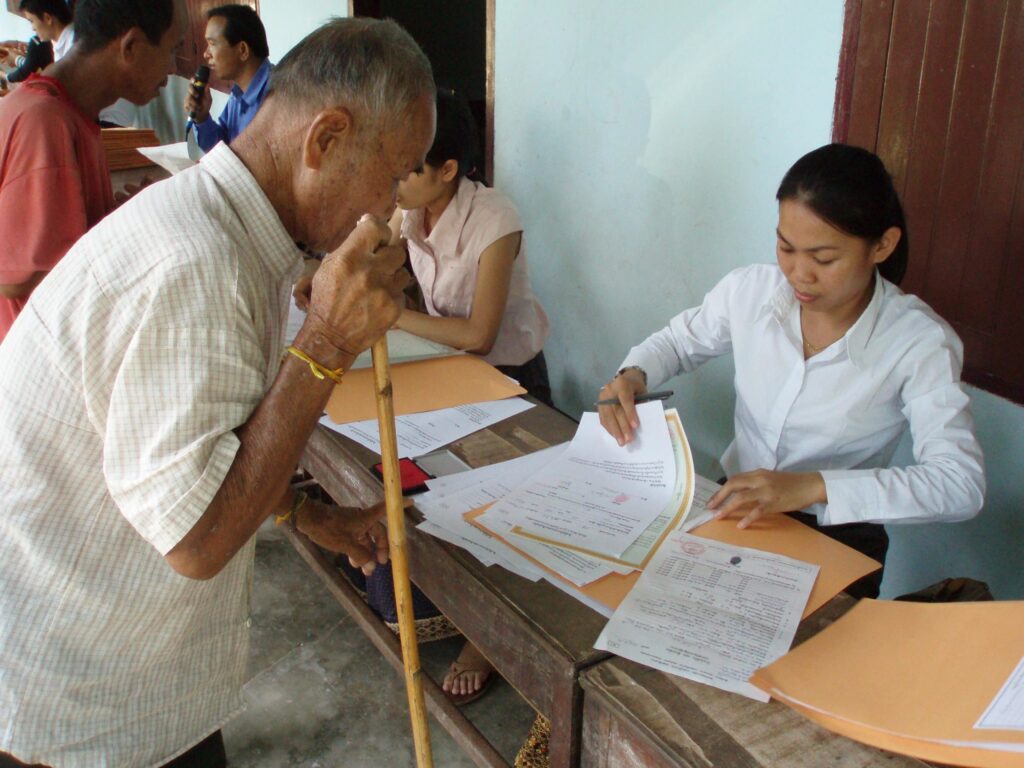
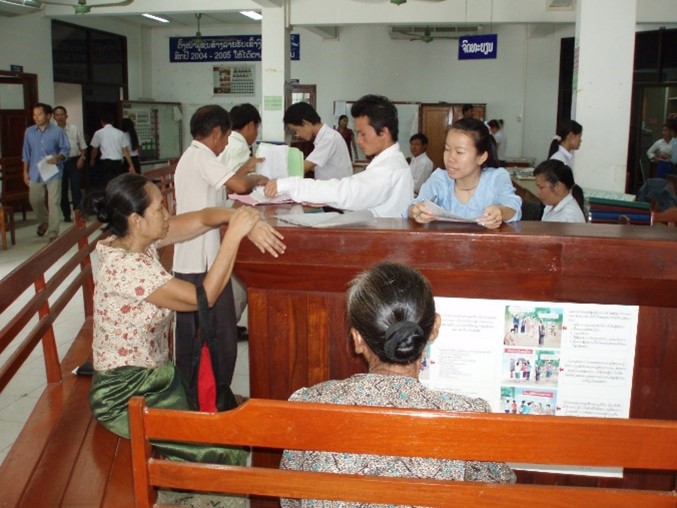
The Ministry of Natural Resources and Environment, Department of Lands (DoL) needs to modernize service delivery and improve land-related databases to ensure up-to-date and accurate land and property ownership systems are in place. The World Bank, through the project funds for the “Enhancing Systematic Land Registration Project” are supporting DoL system upgrades.

The overarching project objective is to accelerate and scale-up systematic land registration and modernize land services, which is predicated upon the application and deployment of information communication technology (ICT) to improve the land information infrastructure and enhance service delivery.

The supporting Lao Land Registry (LLREG) aims to support property registration and a seamless operating environment capturing new registrations and transactions on existing properties. This consultancy focuses on future LLREG functionality, efficiencies, and financial viability to ensure long term sustainability. A 10-year strategy will therefore be prepared based on the initial audit of the LLREG and various systems deployed throughout the Provincial and District offices.

Options for efficiency gains, improvements, standardization and sustainable deployment of ICT within the Laos land sector will offer the possibility of enhanced land-based services and improved tenure security to the citizens of Lao PDR.

The services provided by the LEI team include:

  • Inception and Desktop Technical Quality Audit: The Audit will consist of two work streams: (i) Analysis of Source Code and (ii) Analysis of Lao LandReg (LLREG) Architecture; with the purpose of defining the best analysis tools, refinement of the methodology for reviewing software quality and a review of internal quality characteristics including reviews of specification documents, available system, and user documentation, checking models, static analysis of source code, etc. The audit will be a strategic review of LLREG, drawing upon the most relevant aspects of ISO 9126.
  • Completion of Technical Quality Audit: This will involve the review of the external quality characteristics and ‘quality in use’ – including characteristics of effectiveness, productivity, safety, and satisfaction. In-situ analysis of software properties interacting within the operational environment as well as viewing business processes in operation and reviewing organisational characteristics and infrastructure will be documented. The Audit Report detail the quality of the application and supporting software as determined by analysis and testing.
  • Development of ICT Strategy and Action Plan: The assessment will take on a business focus of the LLREG, reviewing institutional arrangements, business and development priorities and strategies of DoL, MONRE and the Government of Laos. The ICT Strategy and the 3–5-year Action Plan will be developed by undertaking a strategic business process review and identifying opportunity for simplification within the legal framework; reviewing system functional and non-functional specs; assessing the data model for LADM compliance; assessing the existing ICT context, and recommending opportunities for hardware and communication line improvements; reviewing institutional, organizational and human capacity with a focus on sustainability; identifying key risks and mitigations.
Related Projects

Global Land Facility Programme

LEI are partnering with lead, Tetra Tech, in the implementation of the Land Facility program, funded by the UK FCDO. The Land Facility (LF) is designed as an offer to partner countries with a UK post, to co-design effective programs of land related reform. It can provide rural, forestry and urban land governance expertise and assistance to support partner governments’ efforts to expand their capacity to plan, manage and implement national land administration policy, legislation and system reforms.

Project Narrative Effective land governance systems are key to economic growth, rural livelihoods, climate change resilience, and women’s rights. Land is a key root cause of conflict, with increasing competition

Vanuatu Land Development, Greater Port Vila Infrastructure, Affordable Housing Vanuatu, Resilient Settlements Development, VARS Project Vanuatu, Land Development Strategy Vanuatu, Housing for Low-Income Earners Vanuatu, Vanuatu Urban Planning, Informal Settlements Upgrading, Flood Mitigation Vanuatu, Vanuatu Land Administration, Greenfield Residential Development, Public-Private Partnerships Vanuatu, Vanuatu Land Policy Advisory, Vanuatu Land Development Legal Services, Community Trusts Vanuatu, Sustainable Urban Growth Vanuatu, Vanuatu Infrastructure Development, Land Subdivision Vanuatu, Vanuatu Government Land Development

Vanuatu Affordable and Resilient Settlements (VARS) Project: Procurement of Land Development Policy, Legal and Marketing Advisory Services

The International Development Agency of the World Bank Group is supporting the Government of Vanuatu (GoV) with the Vanuatu Affordable and Resilient Settlements Project (VARS) in an amount of US$25 million, to achieve a long-term vision to provide potable water, sanitation, roads, drainage, and electricity to low-income households.

Project Narrative The overarching development objectives of VARS are to (i) improve access to and resilience of infrastructure and services in selected new and existing settlements, and (ii) strengthen land

Lesotho 2 Compact, Millennium Challenge Corporation, MCC Lesotho, Lesotho economic growth, Lesotho Land and Gender Activity, Market Driven Irrigation Horticulture, MDIH Project Lesotho, rural income improvement Lesotho, irrigation infrastructure Lesotho, commercial horticulture Lesotho, gender equity Lesotho, Lesotho irrigation systems, rural land registration system, gender reforms Lesotho, smallholder farmers Lesotho, anchor farmer Lesotho, irrigation scheme development, land use planning Lesotho, rural land market Lesotho, landholder rights Lesotho, Community Councils Lesotho, land registration Lesotho, Lesotho resettlement services, commercial farming partnerships Lesotho, Tetra Tech consultancy, Land Equity International, Lesotho agriculture projects, rural livelihoods Lesotho, agricultural production agreements, Lesotho land reforms

Market Driven Irrigation Horticulture (MDIH) Land and Gender Activity

The Lesotho II Compact was an agreement between the US government-funded Millenium Challenge Corporation (MCC) and the Kingdom of Lesotho (GoL). It was a $US300 million programme to address binding constraints to economic growth in Lesotho. The Lesotho II compact consisted of three projects designed to combat constraints to economic growth by either strengthening private sector participation and/or by improving government coordination, capacity and execution.

Project Narrative The Lesotho Land and Gender activity (L&G Activity), supported the Lesotho Millennium Challenge Account-II (MCA-Lesotho II) to meet the objectives of the Market Driven Irrigation Horticulture (MDIH) Project

In spirit of reconciliation, Land Equity International acknowledges the Traditional Custodians of country throughout Australia and their connections to land, sea, and community. We pay respects to their Elders past and present and extend that respect to all Aboriginal and Torres Strait Islander people.